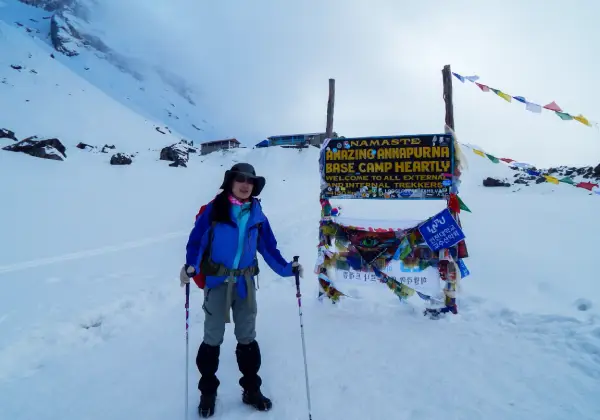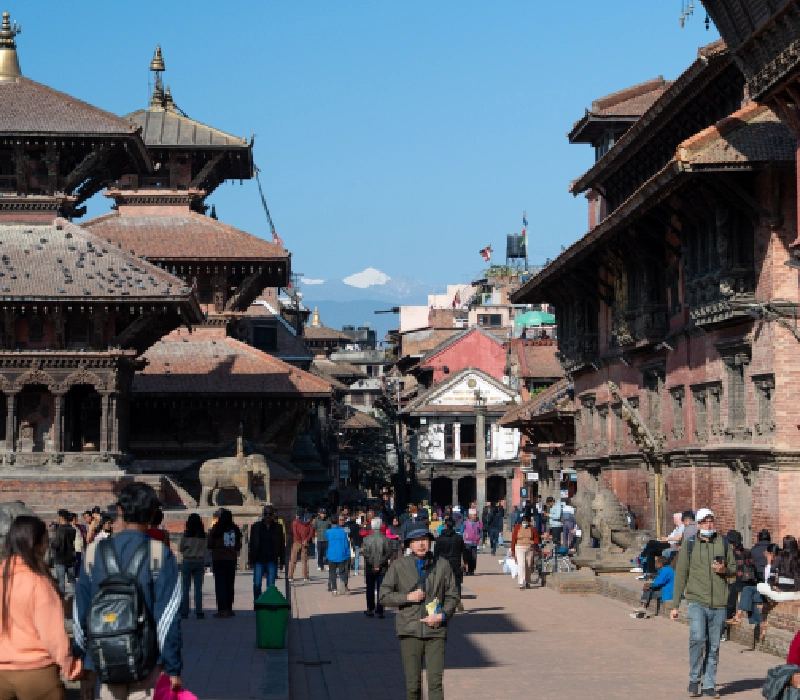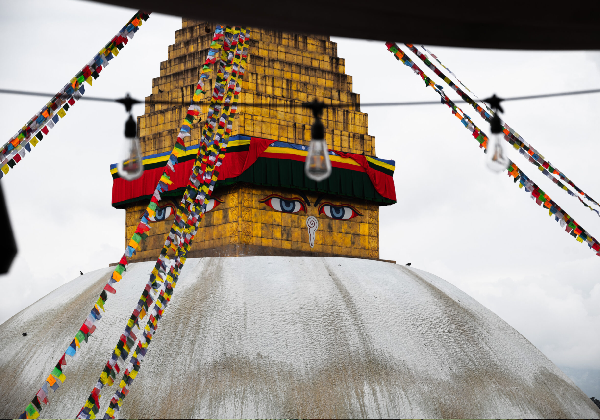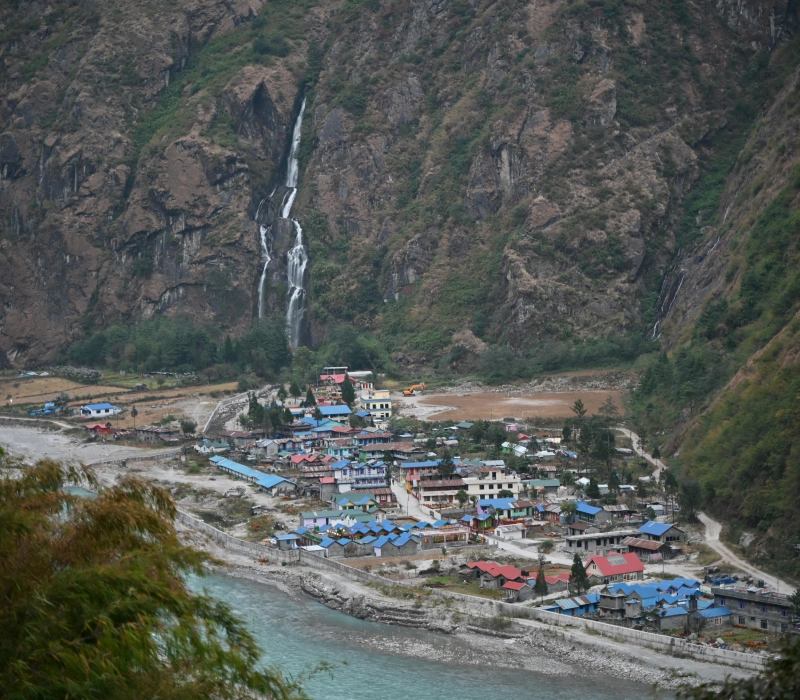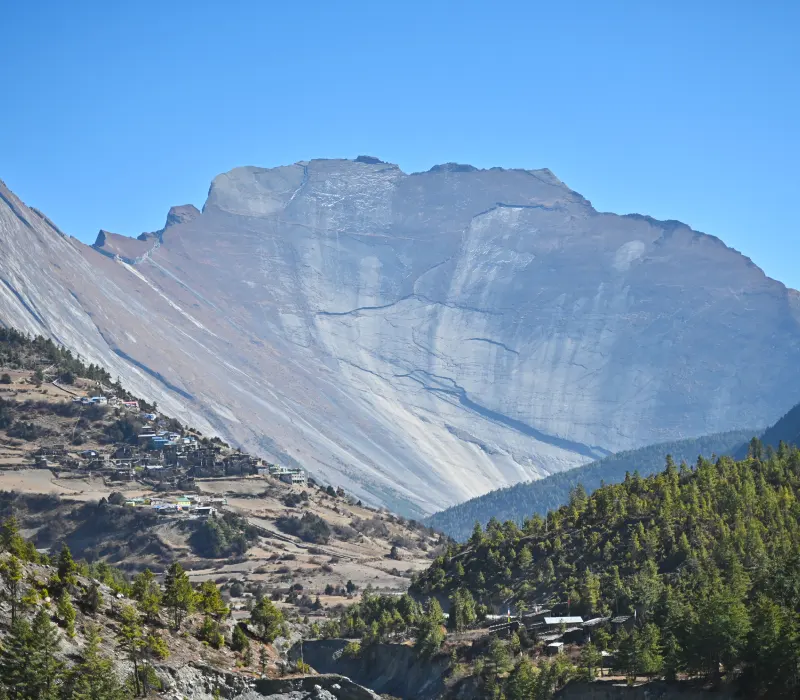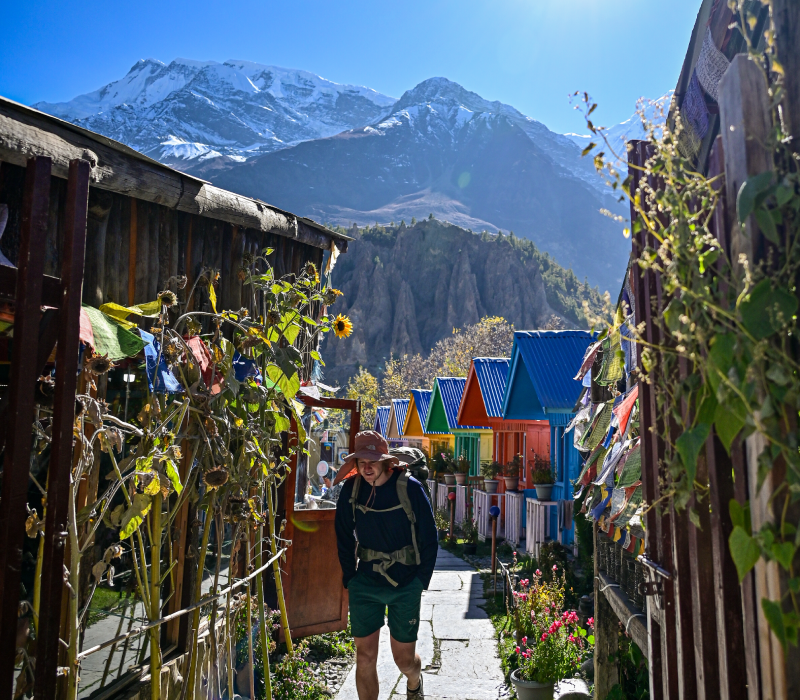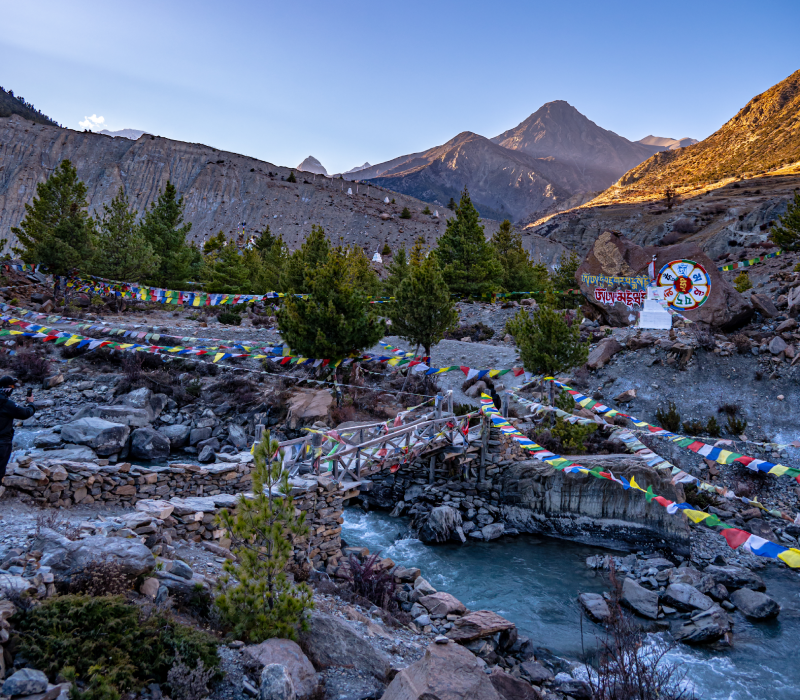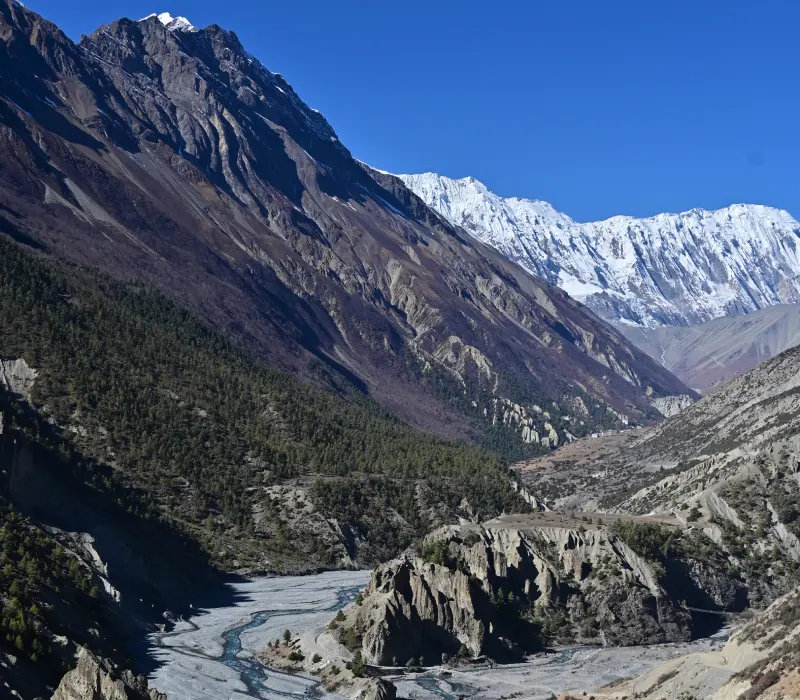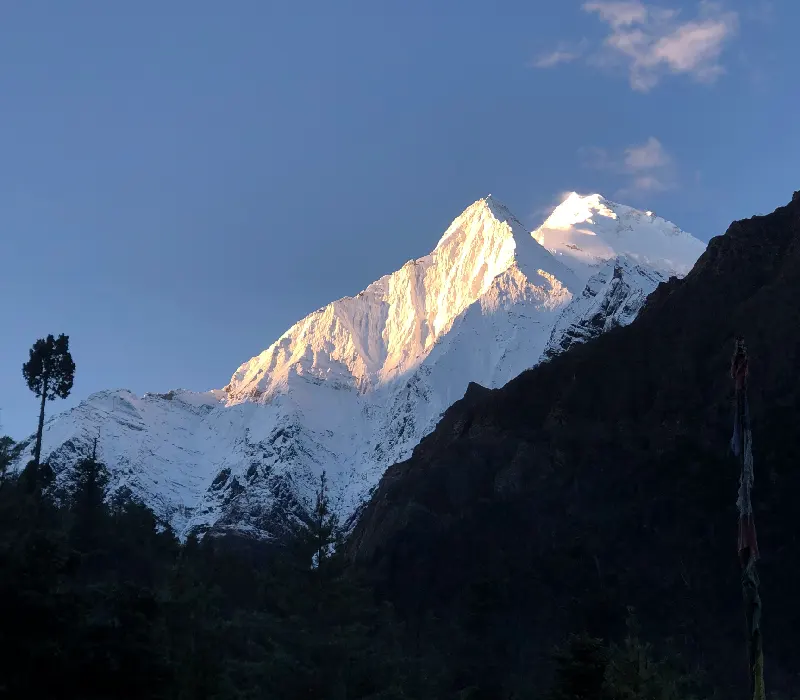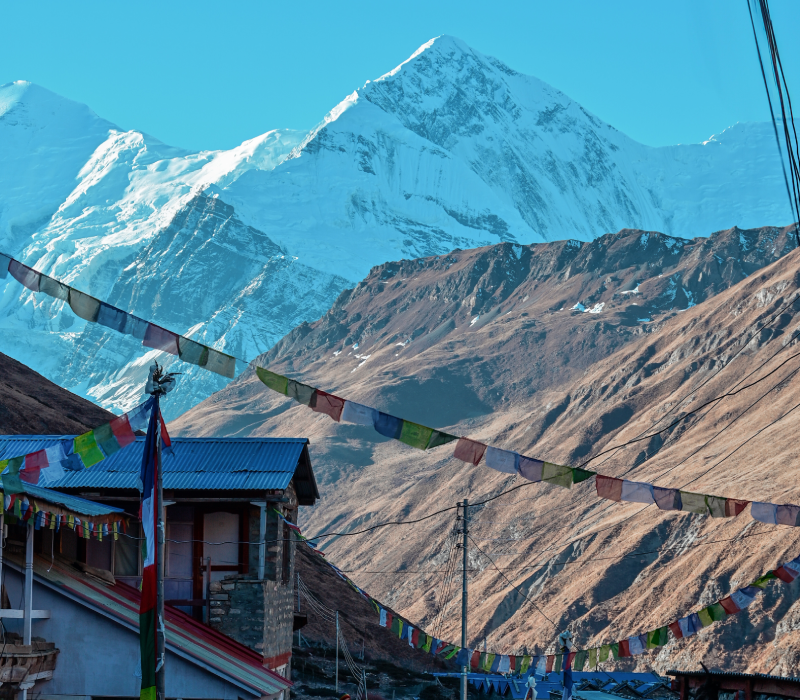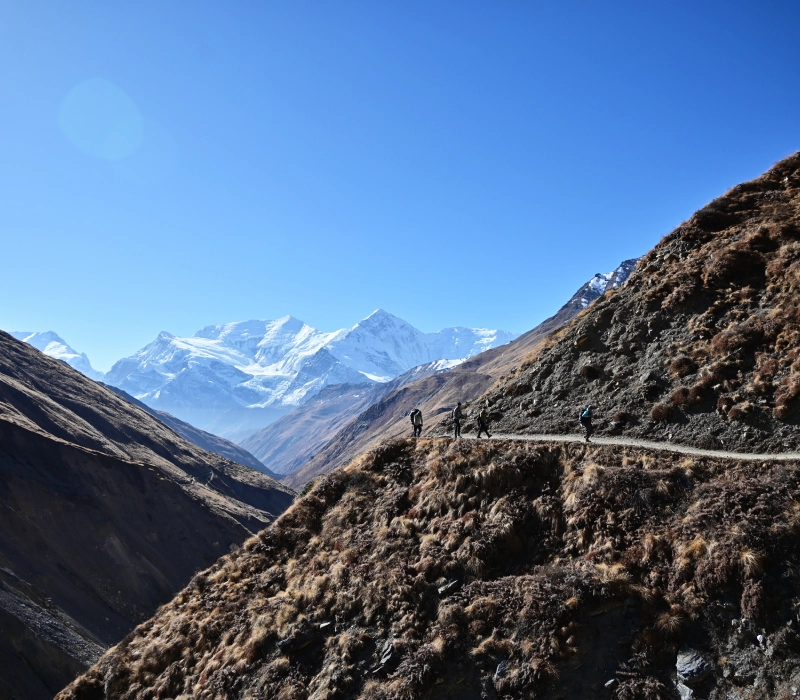
One of the most popular treks in Nepal is the Annapurna Circuit Trek. It is one of the most popular treks among visitors seeking the ultimate trekking experience of their lives. One cannot find such a diverse range of natural treasures, stunning mountains, incredible landscapes, Himalayan culture, warm hospitality and so on, making it the most unique and gratifying.
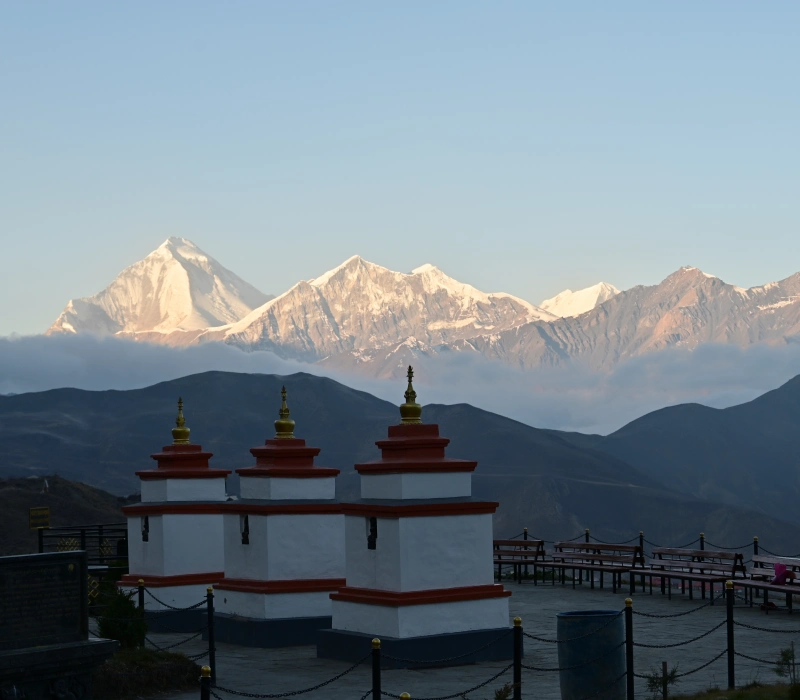
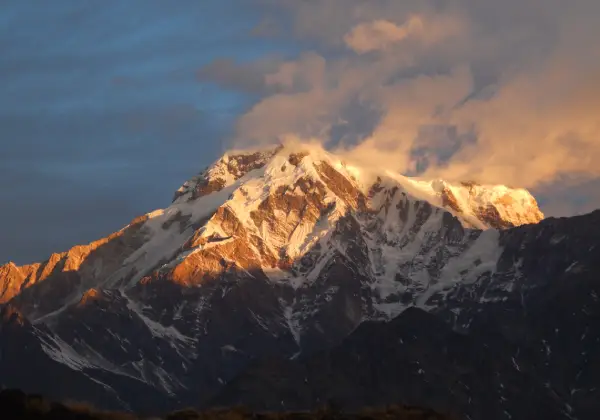
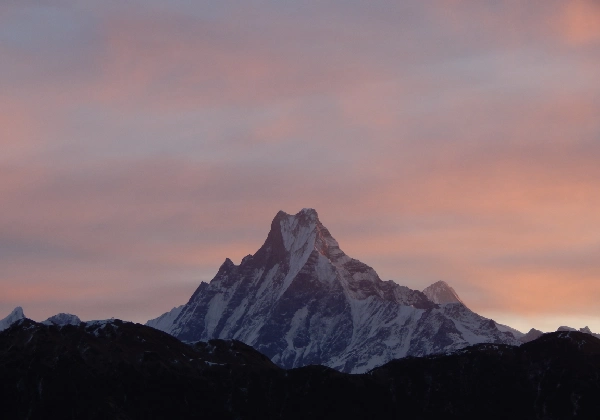
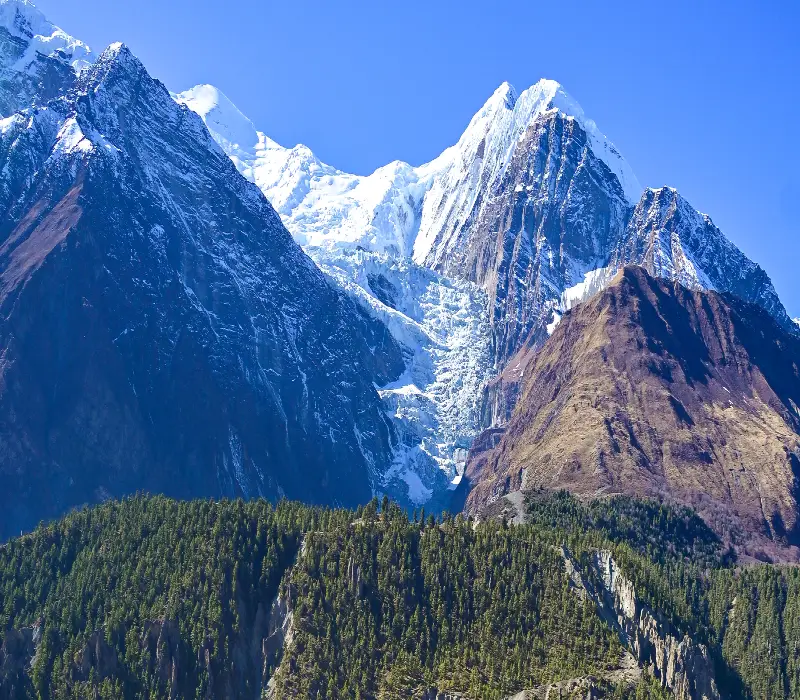
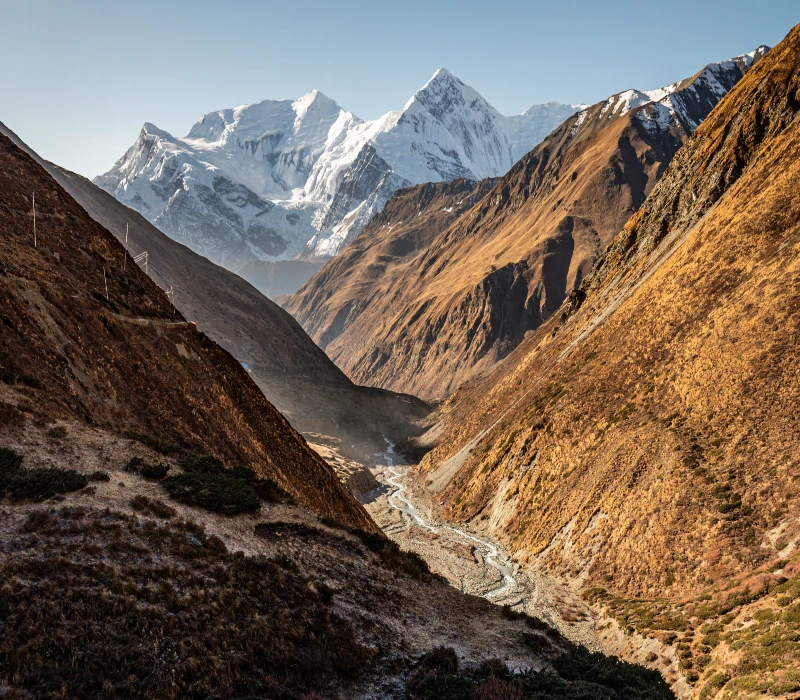
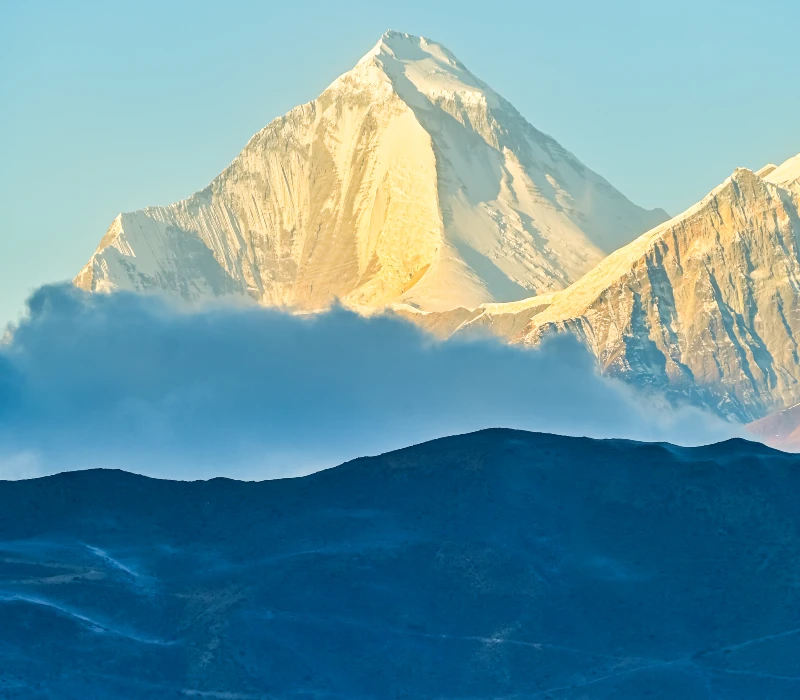
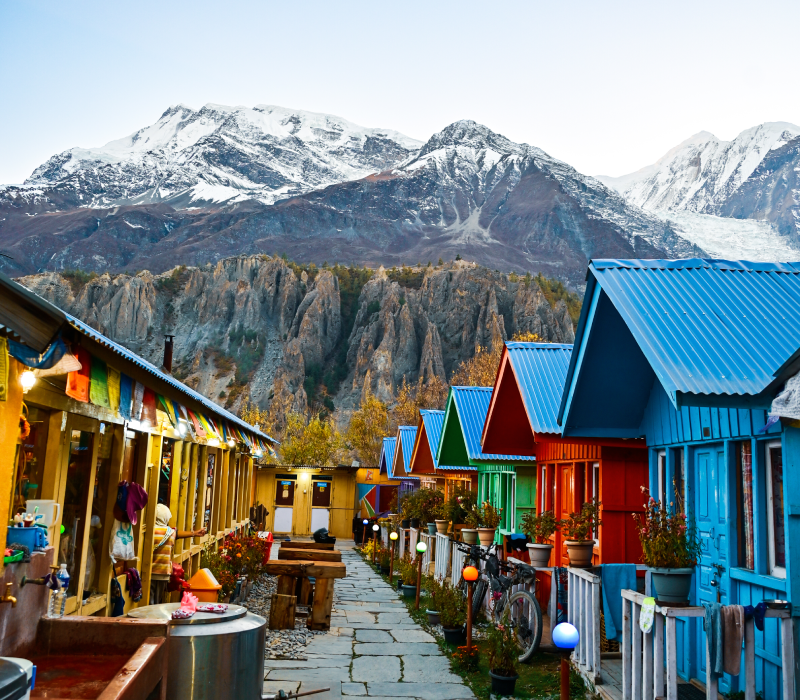
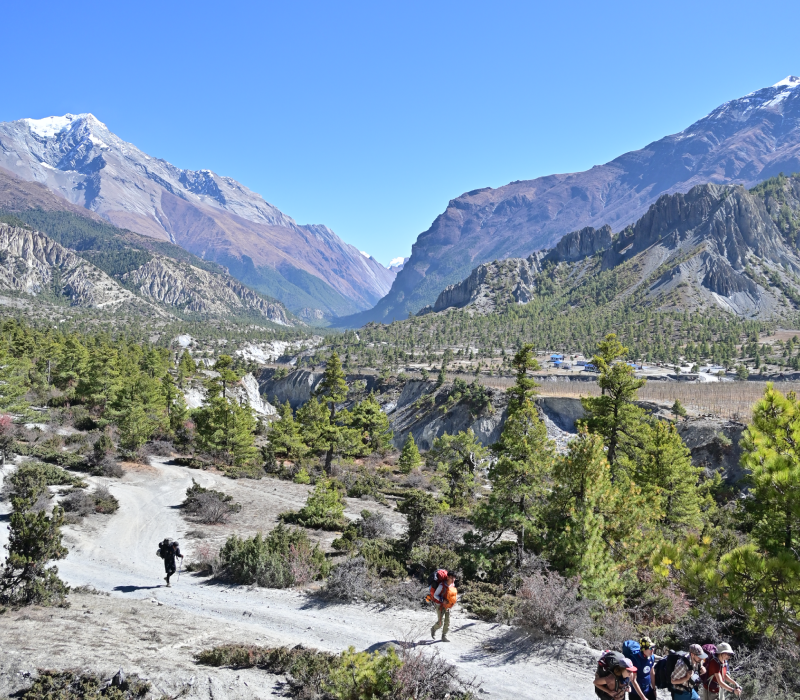
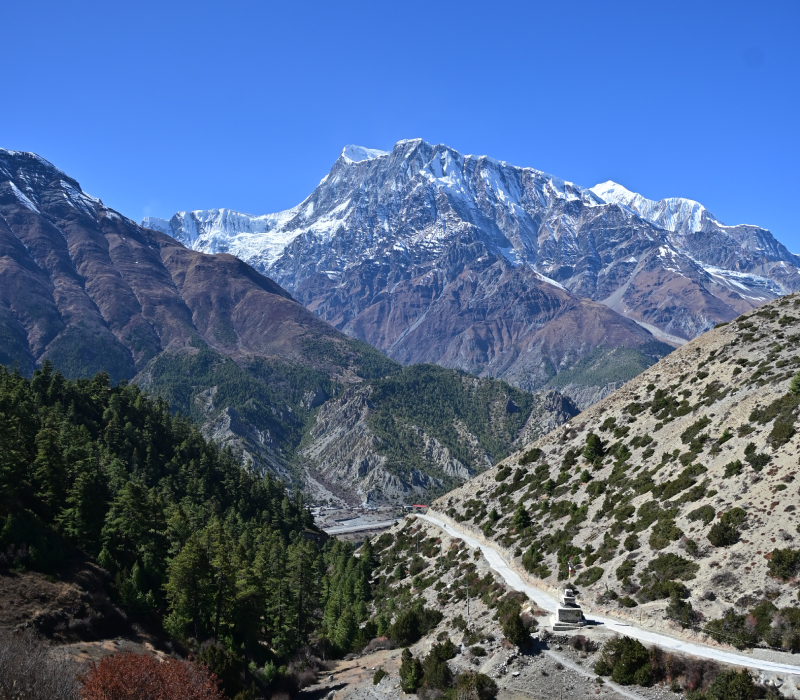
This trekking route offers ample time to witness stunning peaks and mighty Annapurna I (8091 m), Annapurna II, Annapurna III, Annapurna IV and alluring Machhapuchre (Fishtail)– 6997 m along the way. The trail leads you to the mighty Annapurna, passing through hills and beautiful villages inhabited by multiple ethnic groups, including Tamang, Gurung, Sherpa, and Magar. You can enjoy the unique hospitality, lifestyle, and culture, as well as their traditional cuisine and Nepali food. You will pass across rivers, suspension bridges, slippery rocks, rhododendron forests and more, making your trek a lifetime memorable. This could be a once-in-a-lifetime experience for any adventure lover. Annapurna Circuit is best visited in the spring (April-May) and Autumn (September-October).
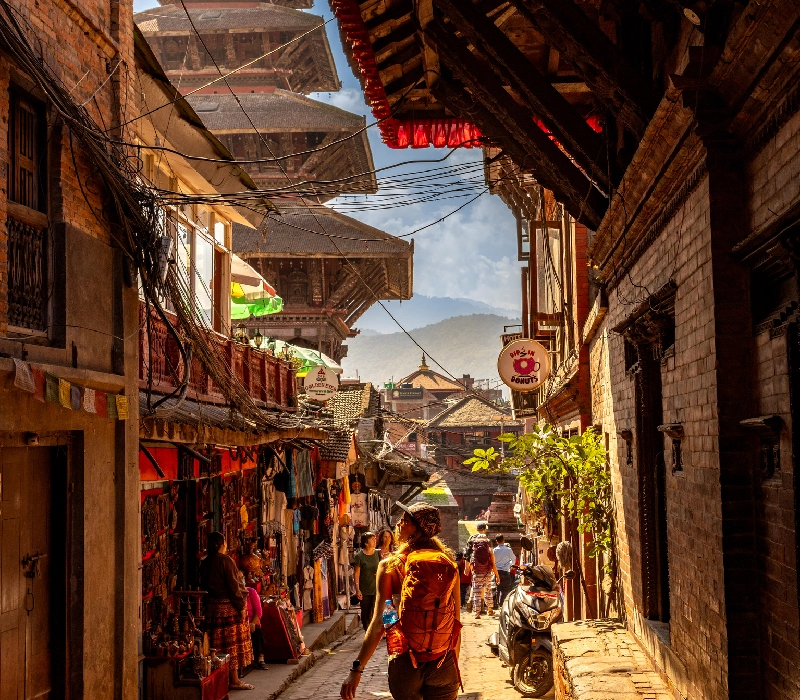
Day 01 Welcome to Kathmandu!
Day 2 Explore Kathmandu
Day 3: Drive to Besisahar – Jagat
Day 4 Drive from Jagat – Chame – Pisang
Day 5 Trek from Pisang to Manang
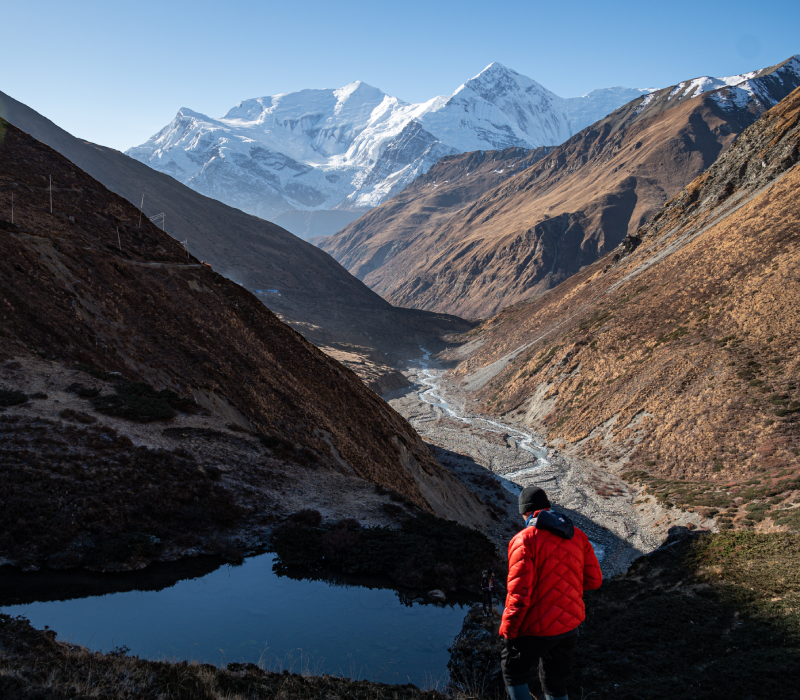
Day 6 Acclimatization Day in Manang – Visit Ice Lake
Day 7 Trek from Manang to Sri Kharka
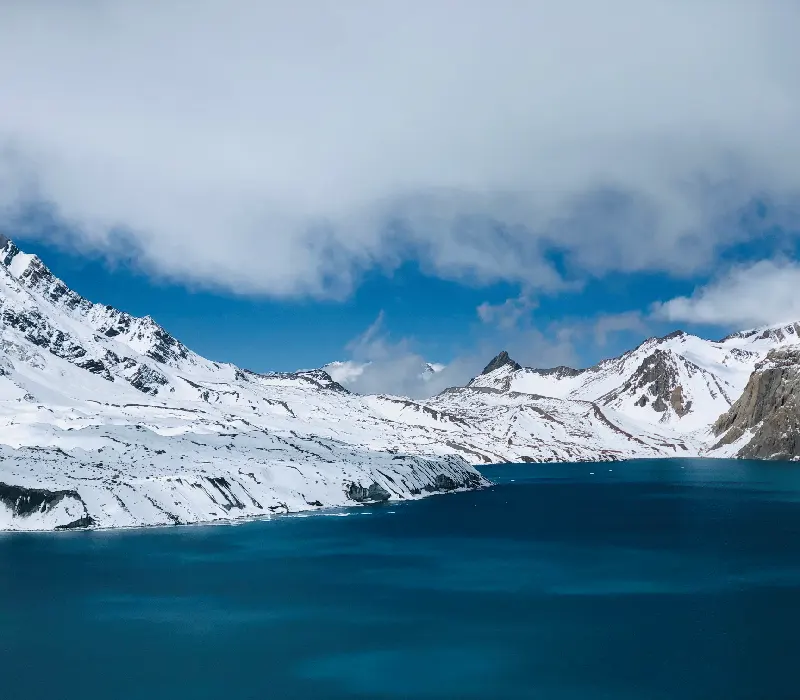
Day 8 Trek from Sri Kharka to Tilicho Base Camp
Day 9 Trek to Tilicho Lake – Sri Kharka
Day 10 Trek from Sri Kharka to Yak Kharka
Day 11 Trek from Yak Kharka to Thorong Phedi
Day 12 Trek to Muktinath Via Thorong La Pass
Day 13 Visit Muktinath Temple – stay overnight at Jomsom
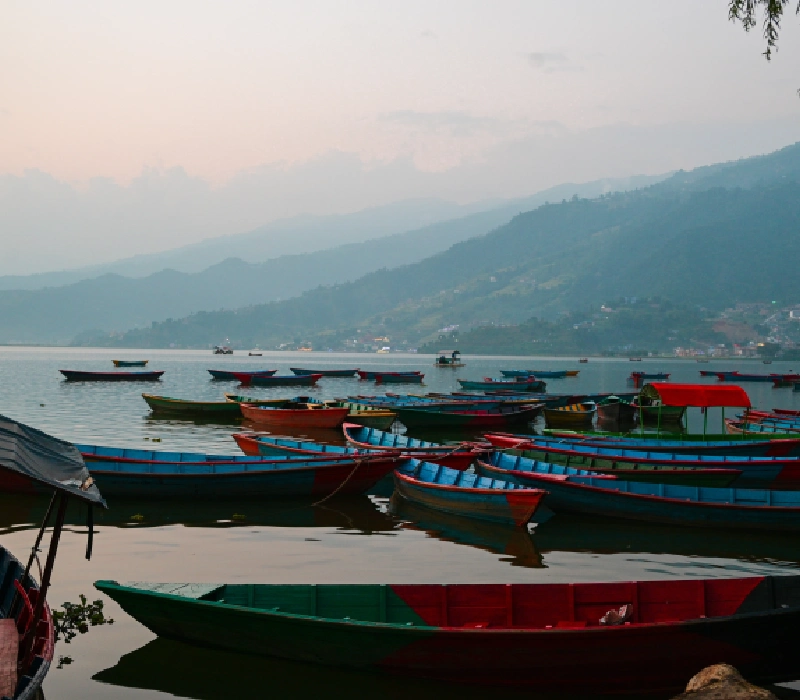
Day 14 Fly/Drive to Pokhara
Day 15 Drive to Kathmandu
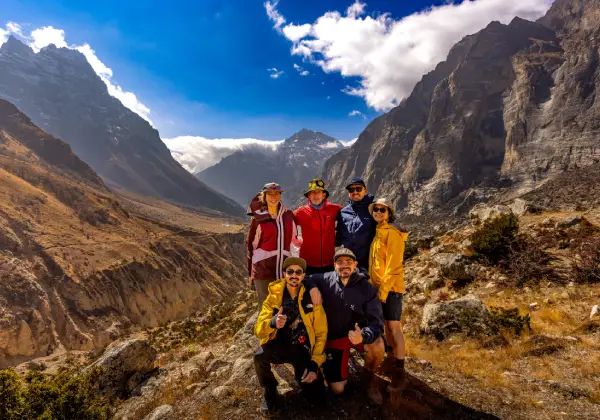
Thanks to Bhupal! Annapurna trek was a lot of fun! Nepali and Himalayan people are the best! The views are stunning! Highly recommend 💕
Typically, 12- 14 days, depending on route and acclimatization.
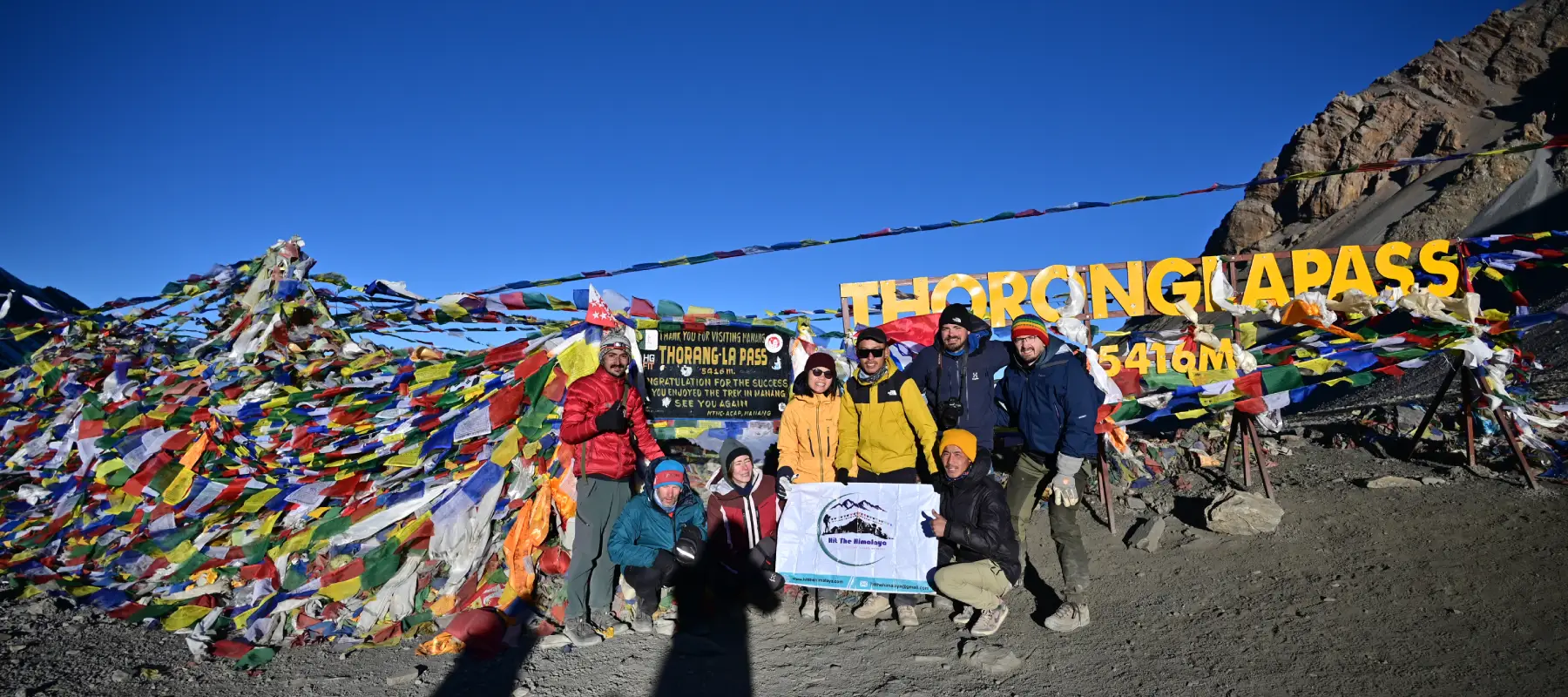
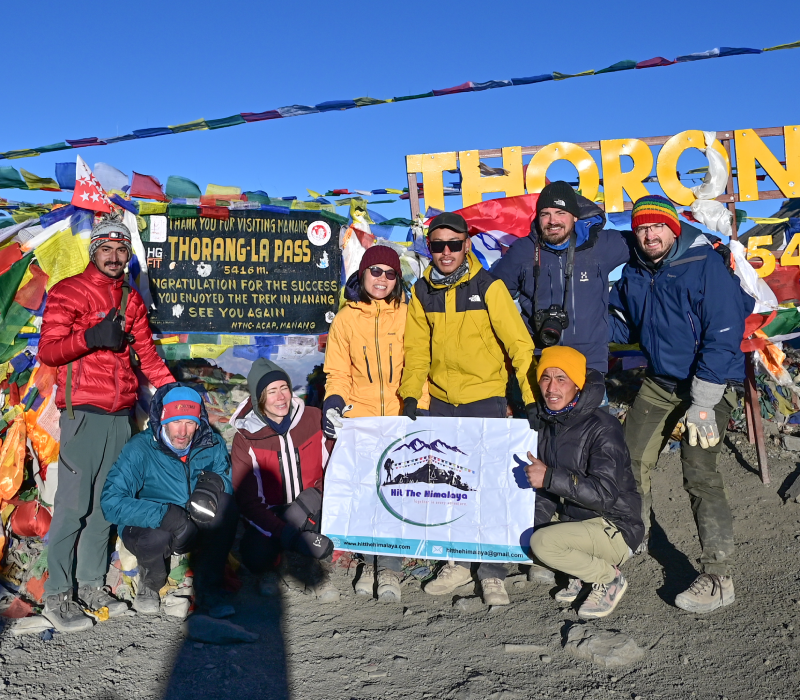
5416 meters at Thorang-La Pass.
TIMS card and Annapurna Conservation Area Permit (ACAP).
Wi-Fi is available for a fee; mobile networks are available in lower regions.
Teahouses offer basic amenities, including shared rooms and bathrooms.
Not mandatory, but good physical fitness is necessary.
Yes, with medical clearance and a slower itinerary.
Yes, it’s a moderate-level trek with manageable trails.
Children above 10 with proper support and gradual ascent can manage it.
Only with the doctor’s approval and necessary precautions.
It is mandatory to have a guide for safety and location tracking.
Travel insurance that covers trekking above 4,000m and emergency evacuation.
Layers, down jacket, waterproof outerwear, trekking boots, headlamp, gloves, and sleeping bag. More Information below.
Cardio training, leg strength workouts, and hiking practice for 4–6 weeks.
Keep it under 6-8 kg; porters carry up to 20–25kg.
Waterproof trekking boots with ankle support.
Yes, carry water purifier tablets and energy snacks, such as protein bars.
Local Dal Bhat, noodles, pasta, pancakes, soups, and tea/coffee.
Yes, the food in teahouses is hygienic and prepared fresh.
Boiled water is available; carry purification tablets or a good bottle.
Rest, hydrate, and descend if symptoms worsen. Always inform your guide.
Yes, but limited clinics are in Manang, Mustang and Pokhara.
Not recommended; risk of landslides (monsoon) and snow blockage (winter).
Avoid cold foods, stay hydrated, and carry a basic medical kit.
Ranges from $1200–$1400 depending on package, duration, and services.
Accommodation, meals, permits, guide/porter services, and transportation.
Wi-Fi, hot showers, charging, bottled water, and snacks are extra.
Yes, but pre-booking is better during peak seasons.
Yes, 10–30% advance to confirm the booking.
Yes, for 3 or more trekkers, we offer discounted rates.
Yes— around 10% of the total trek cost for guides/porters.

If you’re planning a trekking adventure in Nepal—especially at high altitudes, it’s smart to arm yourself with the right insurance. Here’s what you need to know:
Based on altitude coverage, assistance services, and user recommendations, here are some top choices:
|
Trekking to the Annapurna Circuit is a physically demanding activity, and it requires a good level of physical fitness. One should engage in regular cardiovascular and strength-building exercises for at least a few months before embarking on the trek. Exercises such as hiking, running, cycling, and strength training will help prepare the body for the rigours of trekking.
1. Ascend gradually: slow and steady wins
2. Take scheduled acclimatization days
On key treks with high elevation in Nepal
3. Recognize early symptoms and respond appropriately
These firsthand accounts reinforce why acclimatization planning and hydration are non-negotiable.
Acclimatization is the process of adapting to high altitudes. As you trek higher, the air becomes thinner, and the body needs time to adjust. Adequate acclimatization is essential to prevent altitude sickness, a potentially fatal condition. It is recommended to spend a few days at lower altitudes to allow the body to acclimatize before climbing higher.
Trekking to the Annapurna Circuit is a challenging activity, and having a knowledgeable guide is essential for success. A guide will help navigate the route, provide information about the local culture, and assist in case of any emergencies. It is important to choose a guide who is experienced and knowledgeable about the trek.
Proper nutrition and hydration are crucial for maintaining energy levels and preventing altitude sickness. It is recommended to consume a high-carbohydrate and protein-rich diet to provide the necessary fuel for the body. It is also important to drink plenty of fluids to stay hydrated. It is recommended to carry a water purification system or tablets to ensure access to clean water.
Trekking to the Annapurna Circuit is a mentally challenging activity. It requires patience, perseverance, and mental toughness. It is important to be mentally prepared for challenges and to have a positive attitude. It is also important to be aware of the risks and to take appropriate precautions.
Trekking in the Annapurna Circuit is an opportunity to experience the unique local culture and environment. It is important to show respect for local culture and customs and to minimize environmental impact.
Basic first-aid knowledge is essential for trekking the Annapurna Circuit. It is important to know how to treat common injuries and illnesses, such as blisters, altitude sickness, and hypothermia. It is recommended to carry a basic first aid kit with essential items such as bandages, antiseptics, and pain relievers.