Need Help? Call Us +1 519-619-9402

Makalu Base Camp Trek - 21 Days

Trip Facts

  • Duration 21 Days
  • Trip Grade Challenging
  • Max Height 4900m.
  • Start From Kathmandu
  • Ends at Kathmandu
  • Group Size 1 - 10 Pax
  • Transportation Flight/Jeep
  • Trip Meals Breakfast/ Lunch and Dinner
  • Accommodation Tea houses/Camping
  • Best Season April, May, September, October (best in terms of view), November
From US$ 2150 US$ 2050 (Price varies by group size)

Talk to an Expert

Sital Subedi Bhupal Sangroula

sital@hitthehimalaya.com
bhupal@hitthehimalaya.com

+1 519-619-9402

Highlights

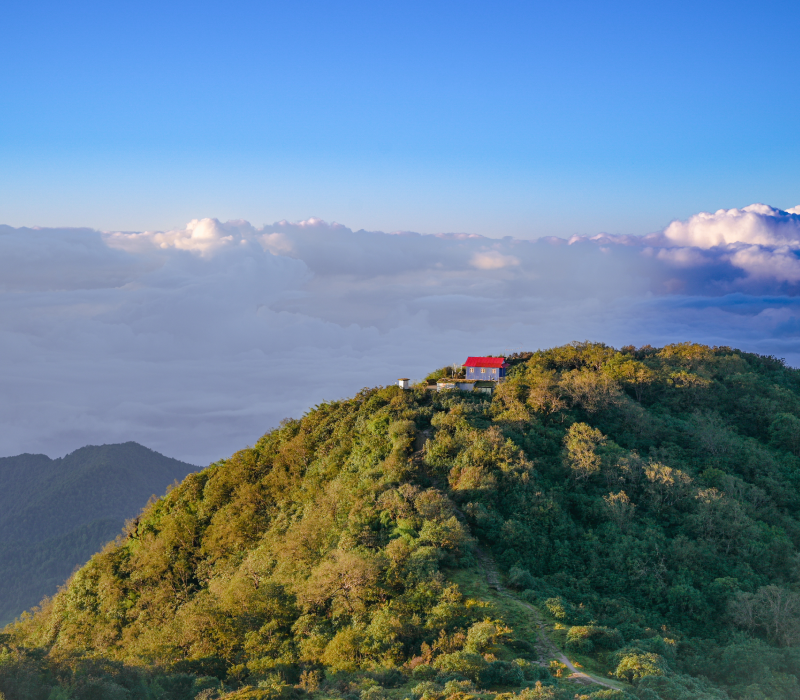
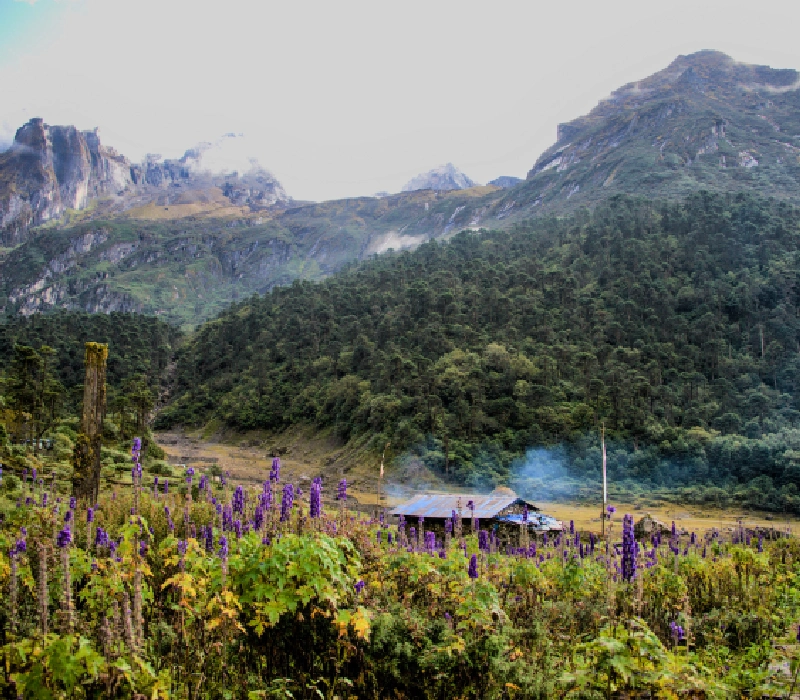
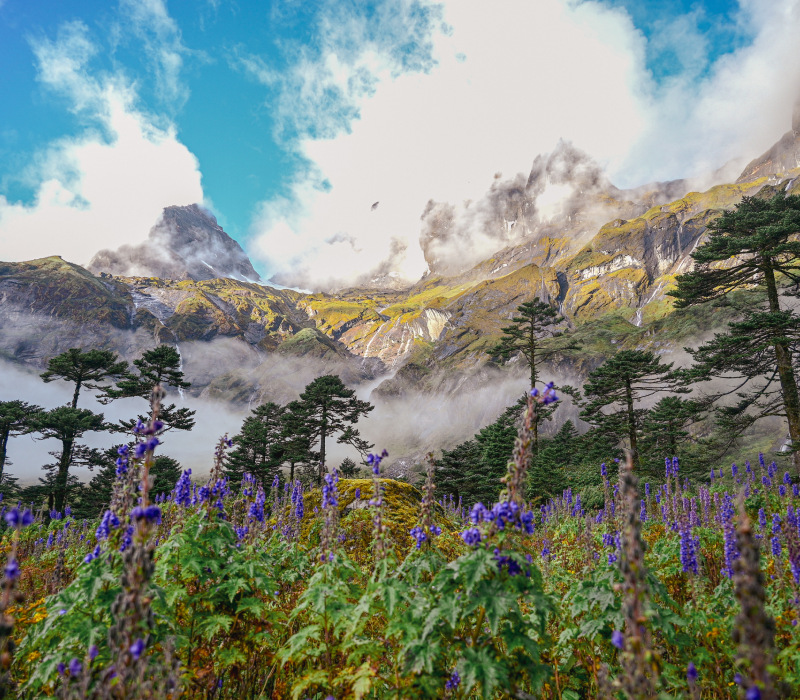
  • Exploring Makalu Barun National Park known as Jewell of East Nepal.
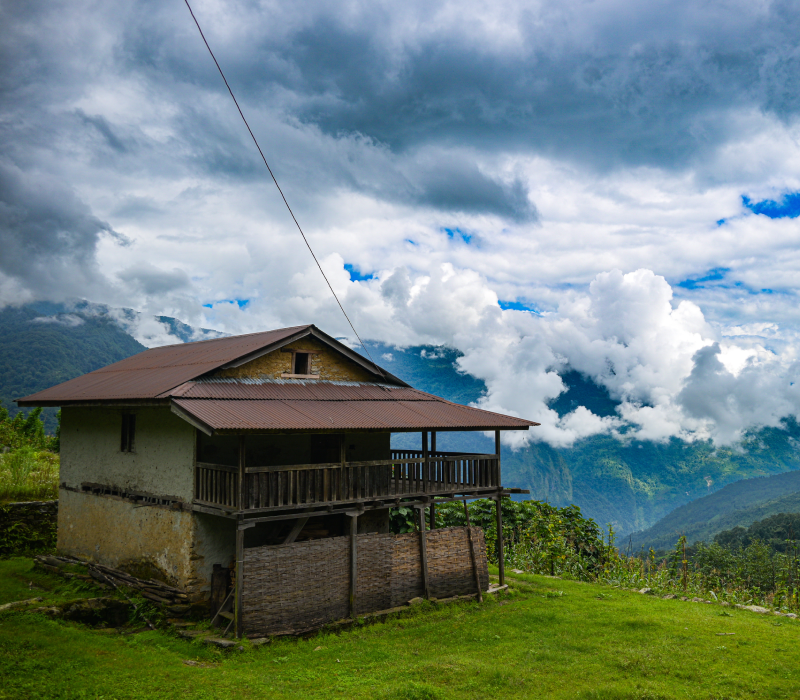
  • Stay with local tribes including Gurung, Rai and Sherpa cultures.
  • On the trail, observe the mighty Mt. Everest and Kanchenjunga mountain Range
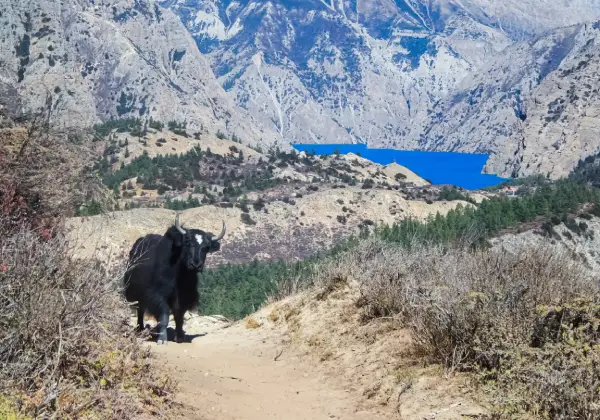
  • Spot some of the rarest wildlife in Nepal, including the Red Panda and Snow Leopards.
  • Walk among green terraced farmland to glaciers, High altitude lakes and multiple waterfalls.
  • Take a chance to visit the most important and holy place called Shivadhara.
  • Observe a huge Glacier in Makalu Base Camp from where the mighty Arun River starts.

Overview

The Makalu Base Camp (MBC) and Shiva Dhara Trek are the most beautiful and challenging trek that takes you to the foot of mighty Mount Makalu (8481 m). The trek is less travelled but offers a spectacular view of the world’s highest mountains (Mt. Everest and Mt. Makalu). This is the most beautiful and exciting of all trekking routes in Nepal. The MBC and Shiva Dhara treks are two separate treks, but when combined provide an unforgettable experience.

The Makalu Base Camp Trek is a beautiful experience that will never get old because of its breathtaking landscape, pretty villages, and stunning peaks. This trek starts from the beautiful village of Tumlingtar and progressively leads to the base of the majestic Makalu. The journey leaves the soggy lowlands and travels across diverse ecosystems and cultures from the lower-lying Rai community to the higher-lying Sherpa community. It is longer, more challenging, and more intense trekking but extremely rewarding at the same time. The Makalu Base Camp trek is ideal for those who want to avoid the mainstream and congested trekking routes and desire an authentic experience in the Himalayan region.

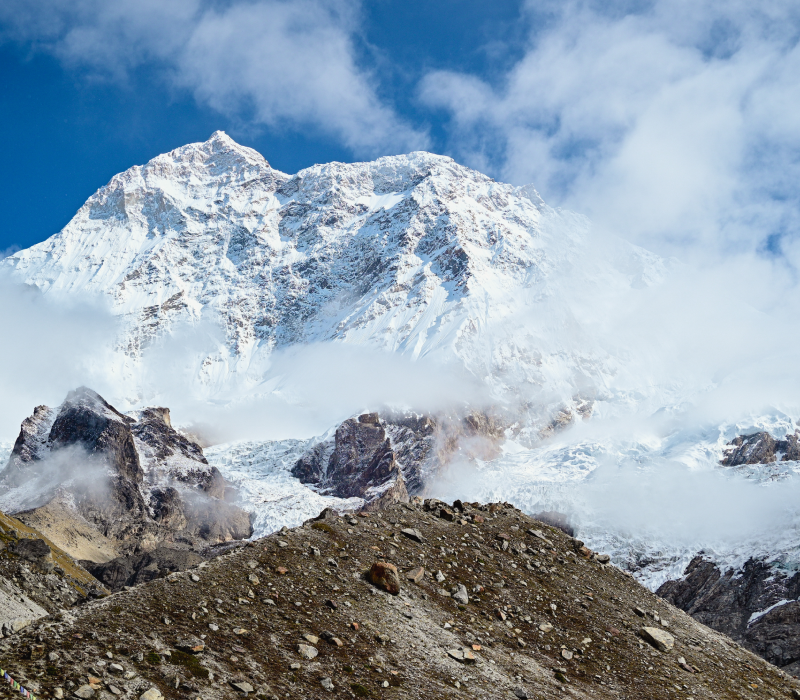
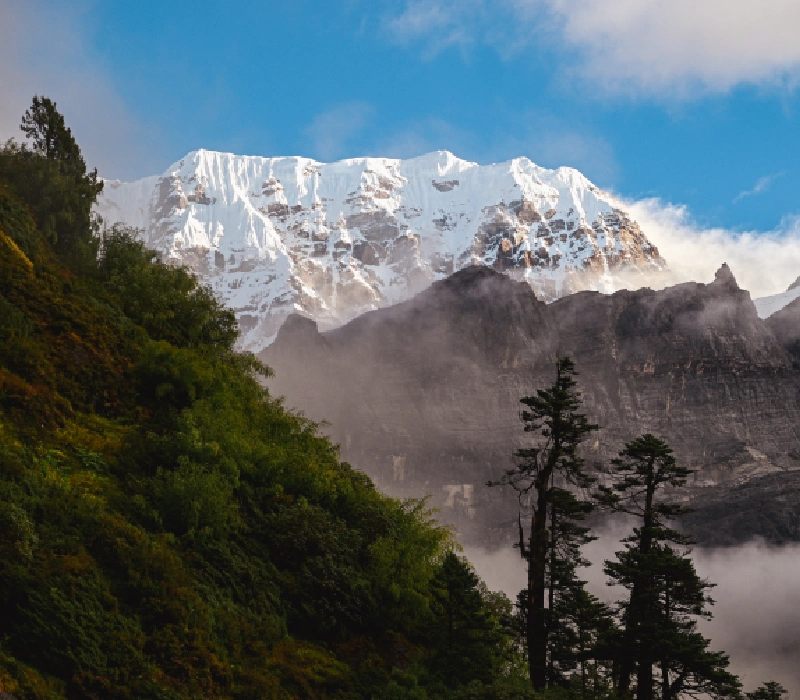
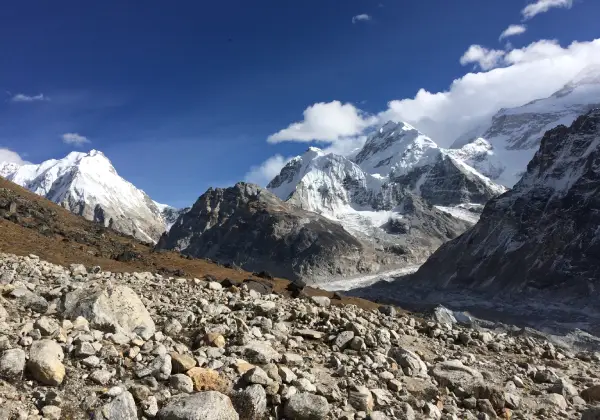
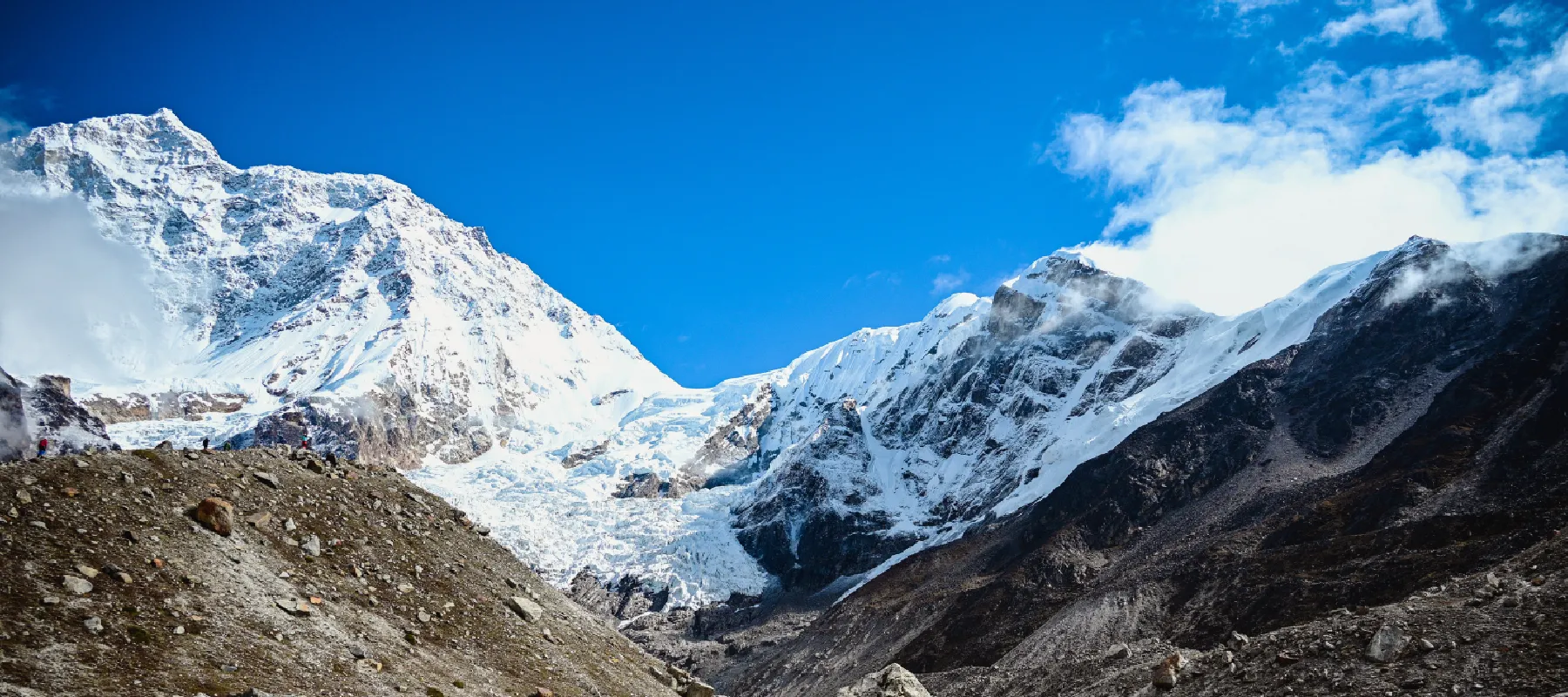
When you eventually arrive at Base Camp, Mount Makalu completely dominates with its majestic presence. The final few hours to Base Camp is unquestionably one of the best and most scenically spectacular walk-ins anywhere in the world. The tallest peaks in the Himalayas, including Everest (8,848.48 meters), Lhotse (8,516 meters), Chamlang (7,319 meters), and Baruntse (7,129 meters), can all be seen from a vista above base camp.
From US$ 2150 US$ 2050 (Price varies by group size)

Talk to an Expert

Sital Subedi Bhupal Sangroula

sital@hitthehimalaya.com
bhupal@hitthehimalaya.com

+1 519-619-9402

Day 01 Arrival at Kathmandu

  • Walking DistanceN/A
  • Highest Altitude1400m/4593ft
  • AccommodationHotel
  • Included mealsBreakfast
Your ultimate adventure starts with your landing in Kathmandu valley surrounded by beautiful green hills and alluring Mountain views. You will be welcomed by our representative at the airport gate. Following that, you will be transferred to the respective hotel nearby to rest and refresh in order to avoid Jet lag. Today you can just explore nearby areas.

Day 2 Explore Kathmandu

  • Walking DistanceN/A
  • Highest Altitude1400m/4593ft
  • AccommodationHotel
  • Included mealsBreakfast
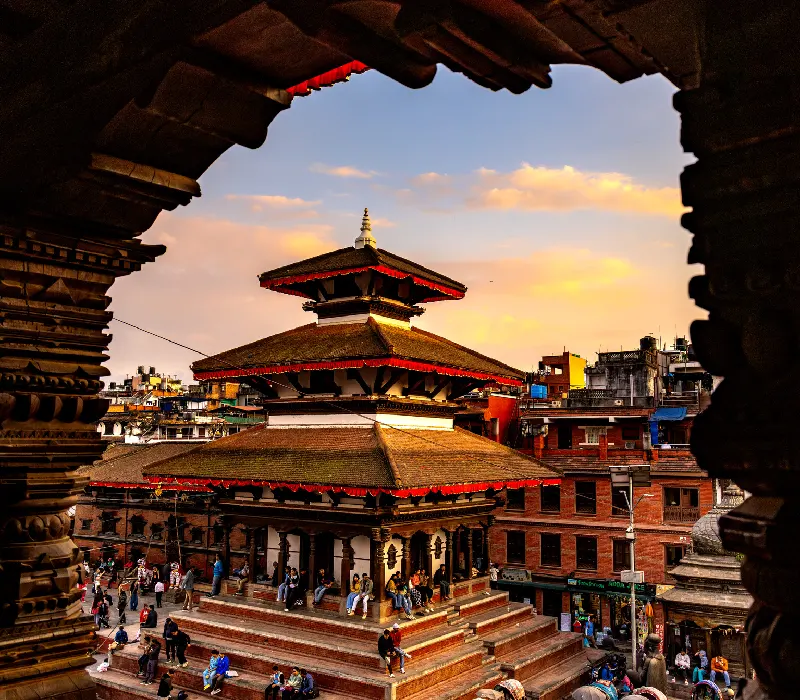
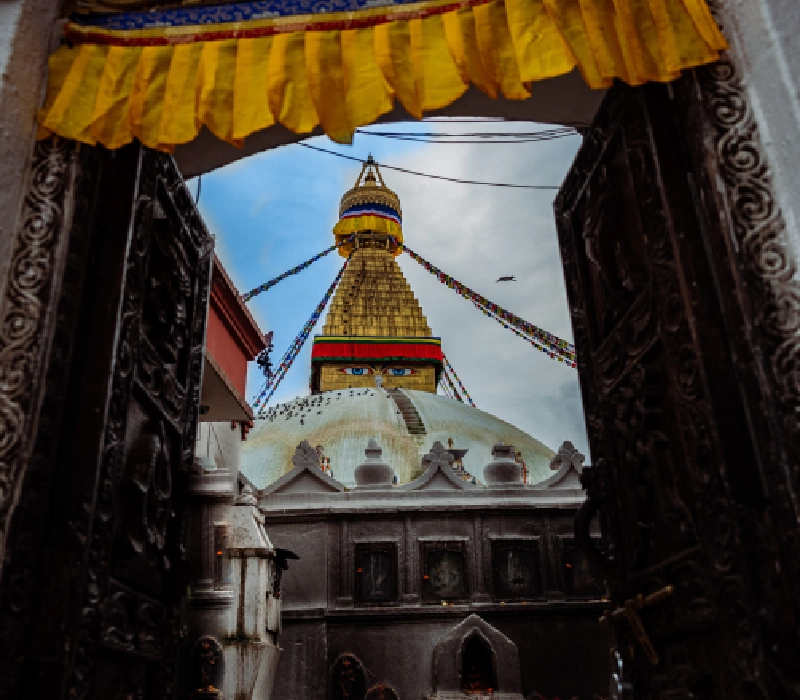
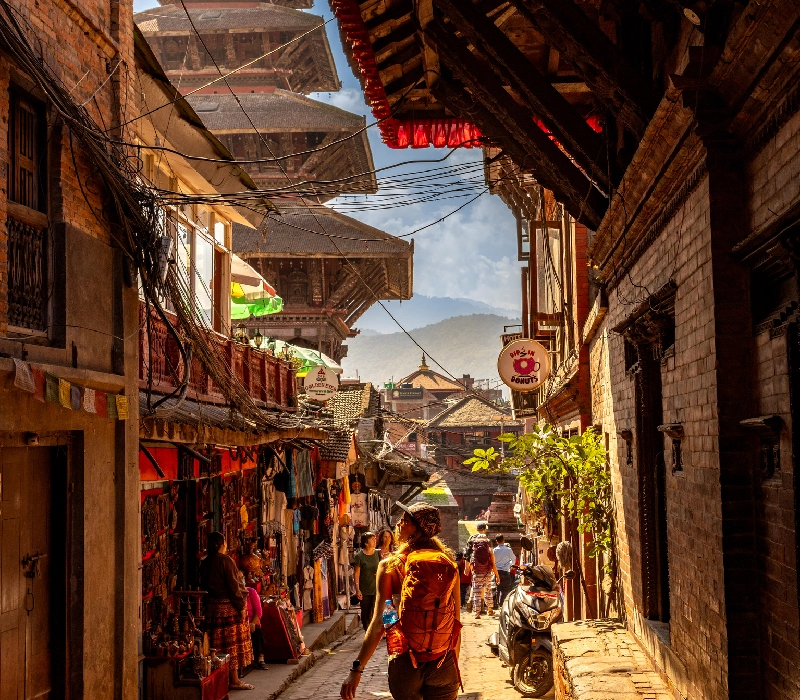
Staying a night prior to start is essential. We recommend you explore and get acclimated before starting a trek if you are coming from sea level. While flights to Lukla are difficult to catch, we will book your ticket as soon as possible. You will enjoy the beauty of historical monuments, along with Hindu and Buddhist temples and pilgrimage sites. Kathmandu is home to seven UNESCO world heritage sites worth visiting and experiencing. You would enjoy many choices of restaurants and meals providing both local and western foods. You can imagine the types of cuisine they offer. You can get your trekking gear from a shop nearby if you need anything for your trek. This evening, our representative will give you a briefing about the trek and address your queries in the best possible way.

Day 3 Fly to Tumlingtar and drive to Num

  • Walking DistanceN/A
  • Highest Altitude1550m/5085ft
  • AccommodationHotel
  • Included mealsBreakfast,Lunch & Dinner
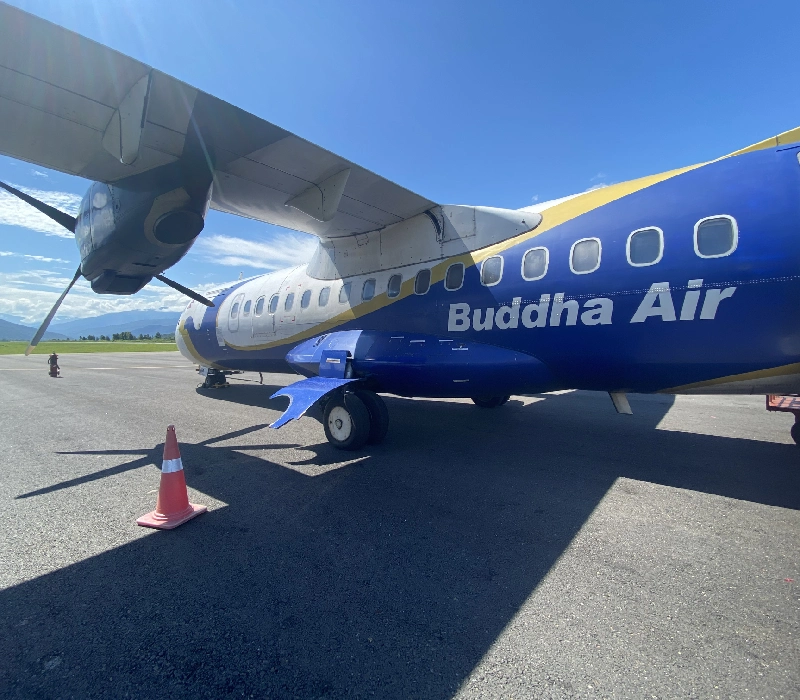
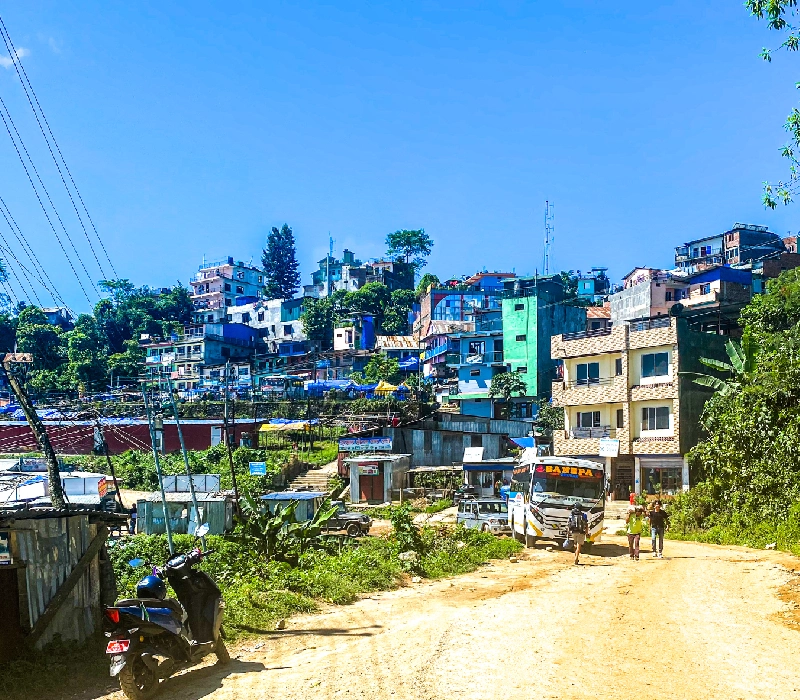
Are you ready for the adventure? Let’s go! Early morning you will be picked up from the hotel by our representative with a guide for your trek. You will enjoy your exciting flight from Kathmandu to Tumlingtar. You will enjoy the aerial view of the mountains along with a glimpse of the mighty Everest from your window. As soon as you land at Tumlingtar Airport, you will have short rest and breakfast before driving to Num, which will be around 4-5 hrs. Today you will spend the night in a beautiful hotel.

Day 4 Trek from Num to Seduwa

  • Walking Distance8 km
  • Highest Altitude1500m/4922ft
  • AccommodationTea House/Camping
  • Included mealsBreakfast,Lunch & Dinner
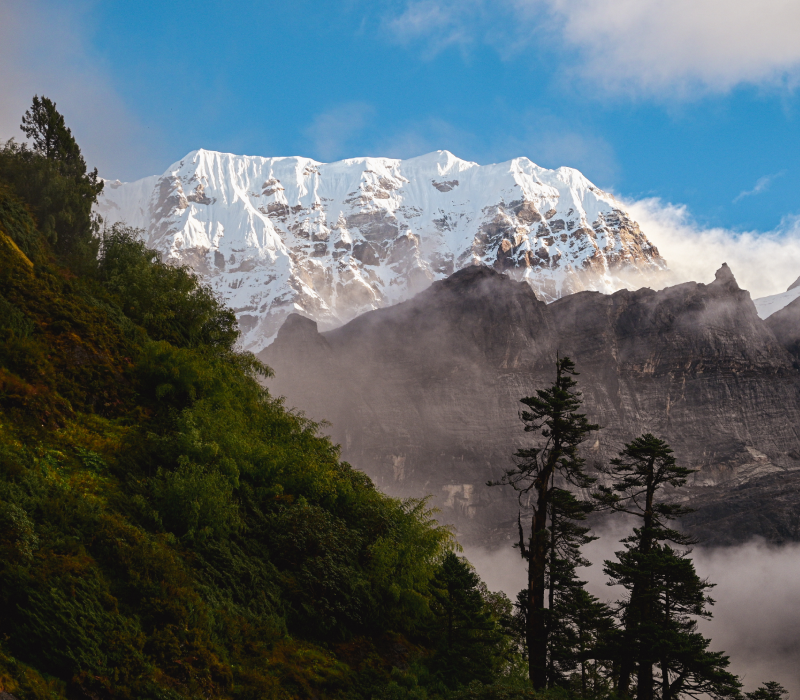
Today, you will descend steep, terraced slopes all the way down to the Arun River via Changlakharka. You will travel through the first leg of today's trek into the wood and slippery sections before crossing the Arun River over a suspension bridge. Your ascent starts when you pass over this spectacular glacial river. After an hour of trek, you will arrive at Lulungma village followed by trekking along the winding trails for two hours will eventually lead you to the beautiful village of Seduwa. This village offers a stunning view of cascading hills covered in verdant, dense trees. Continue to sleep in Seduwa.

Day 5 Trek from Seduwa to Tashigaon

  • Walking Distance8-9 km
  • Highest Altitude2100m/6890ft
  • AccommodationTea House/Camping
  • Included mealsBreakfast,Lunch & Dinner
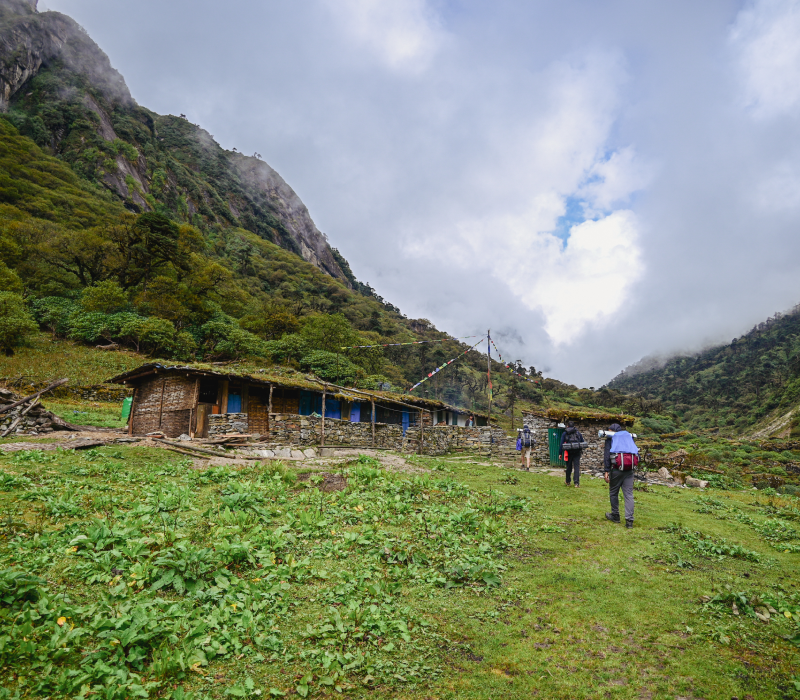
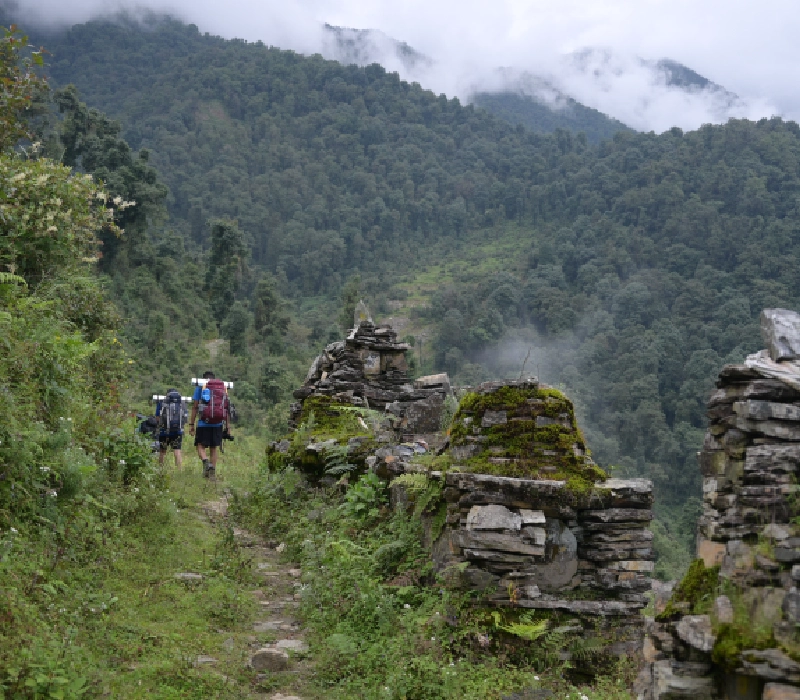
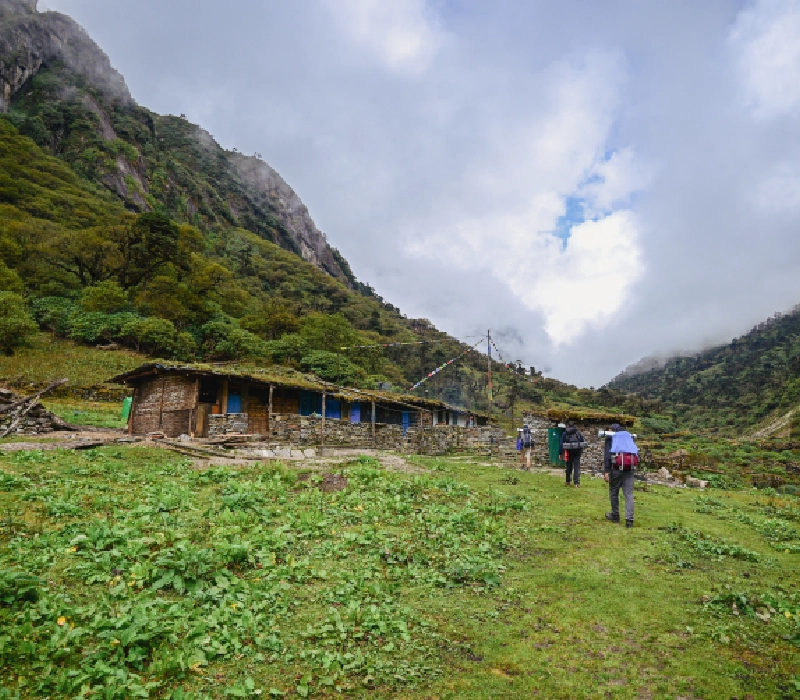
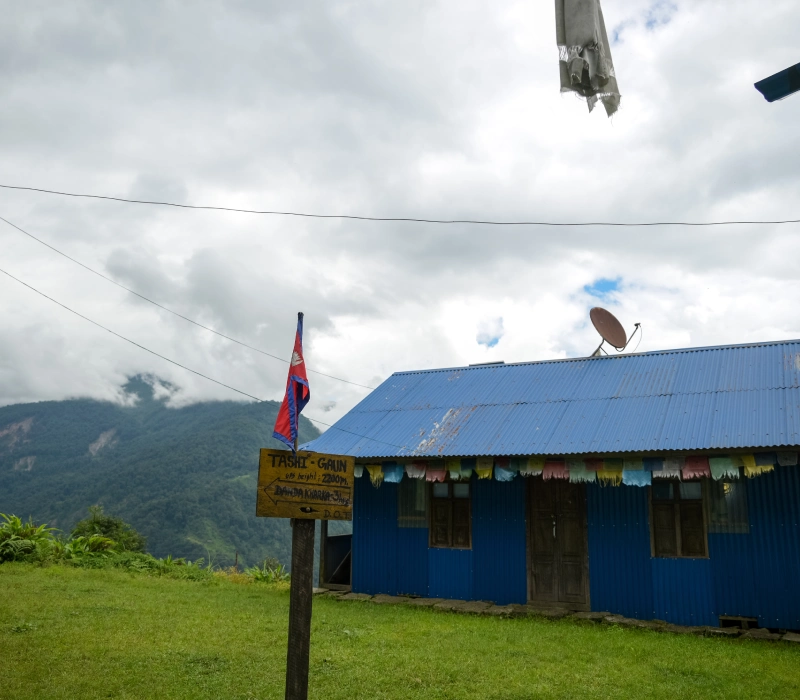
Before leaving behind Seduwa village, you need to show your permits at the entry post in the village. Today’s trek will be wonderful, unlike yesterday’s strenuous ascents and descents. You will go up a trail with lots of stone steps and past several mani (Sculptured) walls. Along the way, you will pass through cardamom fields, bamboo forests and other small farms scattered throughout the slope. Today’s trek will be definitely interesting and uneven. After one and half hours, you will arrive at a small village named Chaksya Danda. You can see Tashigaon from this point, although it takes longer than you may expect to get there as you follow an uneven path. You eventually make your way down to a log bridge just before making the final ascent of stone steps to Tashigaon. To earn your dal bhat, you must climb through the hamlet since the lodges are all positioned on the top.

Day 6 Trek from Tashigaon to Khongma Danda

  • Walking Distance7 km
  • Highest Altitude3510m/11,490ft
  • AccommodationTea House/Camping
  • Included mealsBreakfast,Lunch & Dinner
Early morning, you will leave Tashigaon with full of excitement and energy. The trail onward is tough and steep with stone steps on the way. You will cross a log bridge and keep climbing through a breathtaking rhododendron forest. You can see Tashigaon far below you as you turn around. You will arrive at Dandakharka (a small tea house with an overnight stay facility), after trekking around three hours. Since this is your only opportunity to stop for refreshments until reaching Khongma, you probably have your lunch there. After leaving Dandakharka, it takes about three to four hours to reach Khongma Danda. At Khongma, there are 4-5 lodges for overnight stays.

Day 7 Acclimatization day in Khongma Danda

  • Walking DistanceN/A
  • Highest Altitude3600m/11800 ft
  • AccommodationTea House/Camping
  • Included mealsBreakfast,Lunch & Dinner
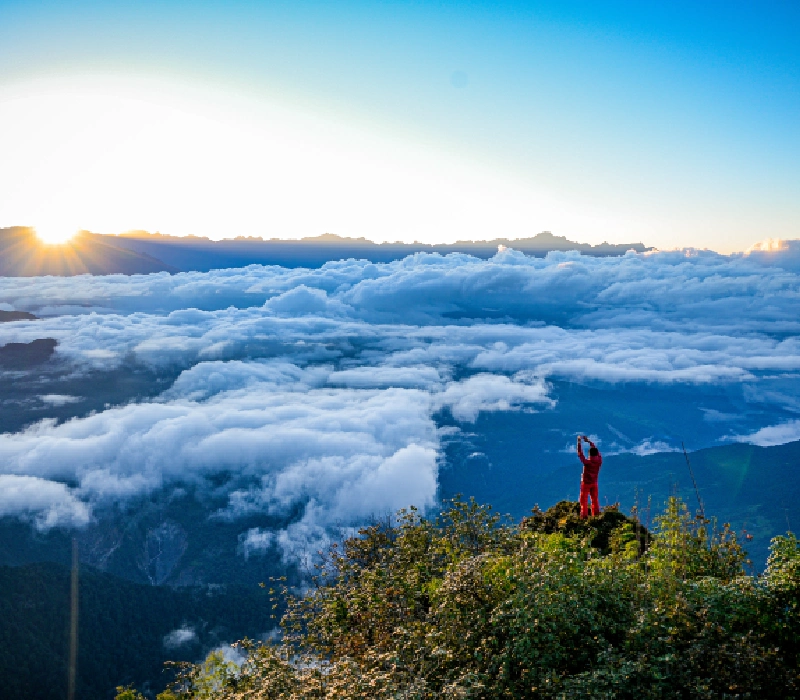
Acclimatization is indeed an additional day to expose your body to a new height. However, you will spend the night back in the same place. This is done to help your body adjust and avoid altitude sickness along the journey. Early morning, you will enjoy the sunrise from the point few minutes of walk from your hotel on the eastern slope. Mt. Kanchanjunga (3rd highest) can be seen from this point. Today, we will hike up to Khongma viewpoint to enjoy the beautiful view of Mt. Makalu. We will acclimate, relax, and enjoy the view from the top; this will help as we progress to higher and higher altitudes. We will have tea and breakfast at the viewpoint from where you will enjoy the view of stunning mountains. After a few hours of rest, we will get back to Khongma Danda for the lunch. Now, you have a half-day to explore and enjoy your time.

Day 8 Trek from Khongma to Dobate via Shiptang La pass

  • Walking Distance9 km
  • Highest Altitude 4300m/14,110ft
  • AccommodationTea House/Camping
  • Included mealsBreakfast,Lunch & Dinner
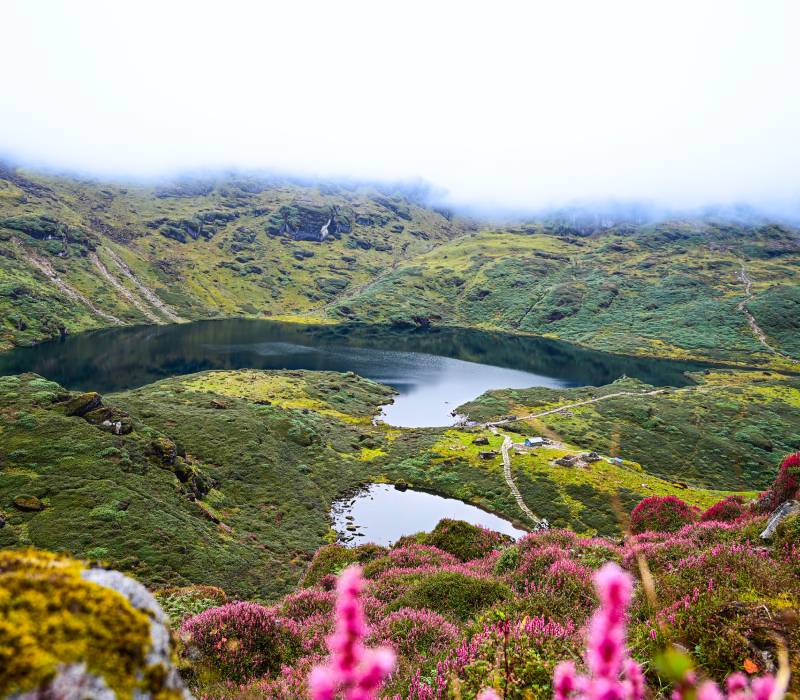
Today, you are going to pass four passes, together with slopy ridge stretches that will provide a stunning view of snowcapped peaks. If you’re going on a trek in April, be prepared for snow. Make sure you have plenty of snacks and water with you because it’s going to be a long, and difficult day. There is only one lone tea house on the Shipton La pass, and it’s likely that you won’t have lunch until you reach Dobate. Your first pass will be Khongma La (3890m). Before beginning your ascent toward the second pass, you briefly drop. As you move across an open slope, you can see Kangchenjunga. Sano Pokhari Danda, at 4,105 meters, is reached by several difficult stone steps, with Sano Pokhari Lake below. It takes around an hour to get here from the Khongma La, though it can take longer if you have to navigate through snow. You reach the highest pass, the Shipton La, at 4,200m after a more craggy trail. Although not difficult, the way to the Shiptang la is rather steep. Now the path is less difficult until Thulo Pokhari (4080m). During the Janai Purnima Festival, Hindu pilgrims go there and decorate it with prayer flags. From the lake, the ascent to the Keke La pass (4170m) is simpler. After 45 minutes of descent, you arrive at your lodging in Dobate, which is a very nice sight after your four pass labors! This area has a decent, spotless lodge with warm and inviting people. You'll get a special treat as payment for your efforts today with the dal bhat.

Day 9 Trek from Dobate to Yangle Kharka

  • Walking Distance9-10 km
  • Highest Altitude3560m/11680ft
  • AccommodationTea House/Camping
  • Included mealsBreakfast,Lunch & Dinner
This morning, you will have to descend through the rhododendron and pine forest. Through the woodland, there is a vertical slope that can be treacherous if snow is still there. When you finally get to the river, you start walking along a trail that runs beneath a sizable landslide region. On the way this morning, you catch glimpses of Chanlang and Tutse. You arrive at the tea shop at Phemathang, 3,500m, after a quick rise. From Dobate, it takes about four hours to get here. Just before you get to Phemathang, there is a stunning waterfall. After a short distance of walking, you come to a wooden bridge that crosses the Baron Khola. The river is now on your left as the trail undulates. In several locations around Yangle Kharka, there has been a significant amount of labor put into creating a stony road. From the tea shop in Phemathang, it takes around 1.5 hours to get to the meadows of Yangle Kharka and your lodging for the night. It's a wild, inaccessible, windswept place.

Day 10 Trek from Yangle Kharka to Yangmale Kharka

  • Walking Distance12 km
  • Highest Altitude4410m/14470ft
  • AccommodationTea House/Camping
  • Included mealsBreakfast,Lunch & Dinner
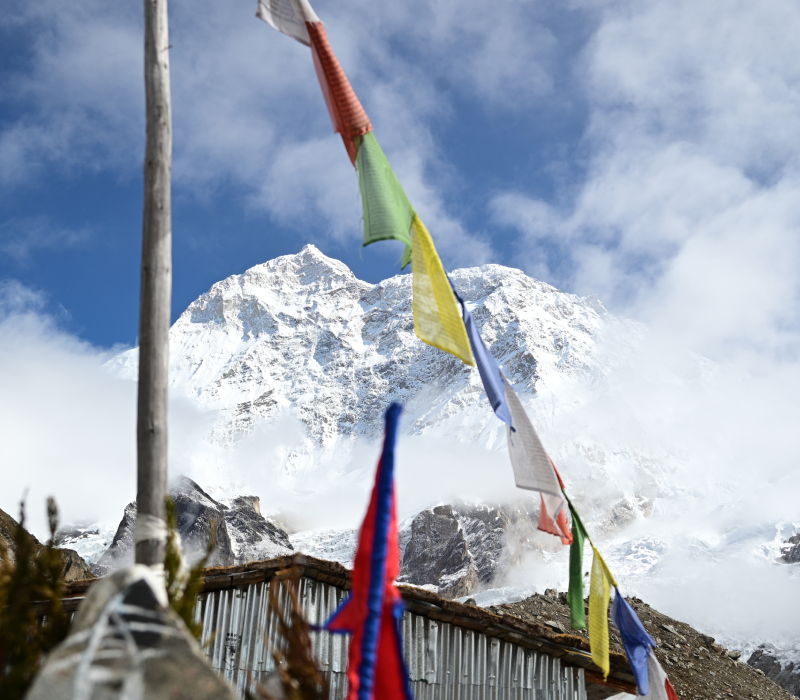
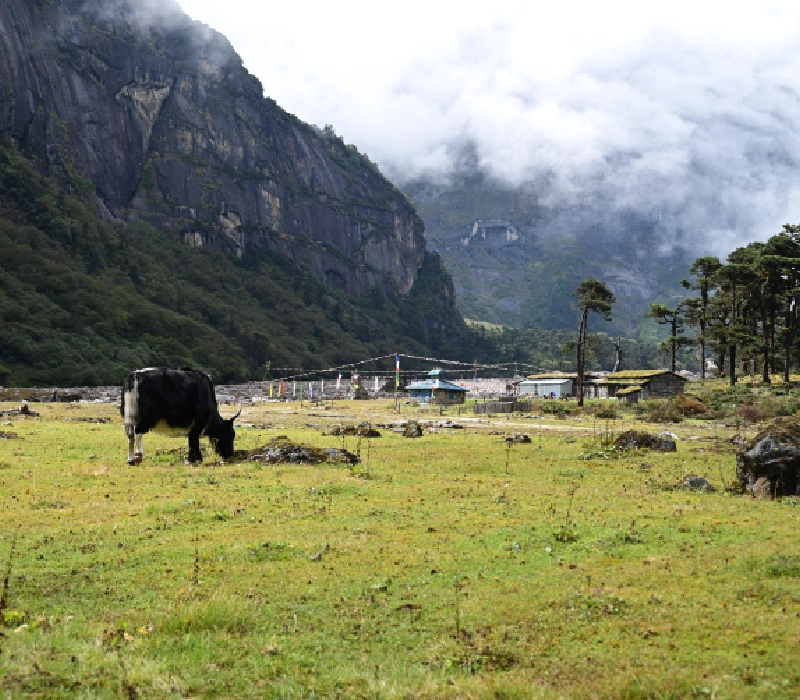
From your hotel, you walk down to the river and a tiny monastery. It's a beautiful, flat beginning, with the river on your left and the alluring aroma of juniper accompanying you as you move. Along the trail, you encounter numerous colorful prayer flags. It's a very beautiful day, with craggy snow-covered mountains, sheer cliffs, cascading waterfalls, and religious caves serving as a visual feast. As you reach Neha Kharka, you can see the way to Shiva Dhara on your left. Before moving higher, you can have a hot cup of tea in Merek. Take it slow and steady at this point since you'll undoubtedly feel the altitude as you climb toward Yangmale. From Merek, it takes about two hours to go to your tea house in Yangmale. Beautiful peaks in the background will welcome you to this location. A prayer flag-covered mani wall is located just in front of the line of rooms.

Day 11 Acclimatization day at Yangmale Kharka

  • Walking DistanceN/A
  • Highest Altitude4500m/14,765ft
  • AccommodationTea House/Camping
  • Included mealsBreakfast,Lunch & Dinner
Today, your acclimatization alternatives are limited. However, there is a good hill and viewpoint next to your hotel, and you can continue walking as far as your guide recommends.

Day 12 Trek from Yangmale Kharka to Makalu Base Camp

  • Walking Distance8-9 km
  • Highest Altitude4900m/16,080ft
  • AccommodationTea House/Camping
  • Included mealsBreakfast,Lunch & Dinner
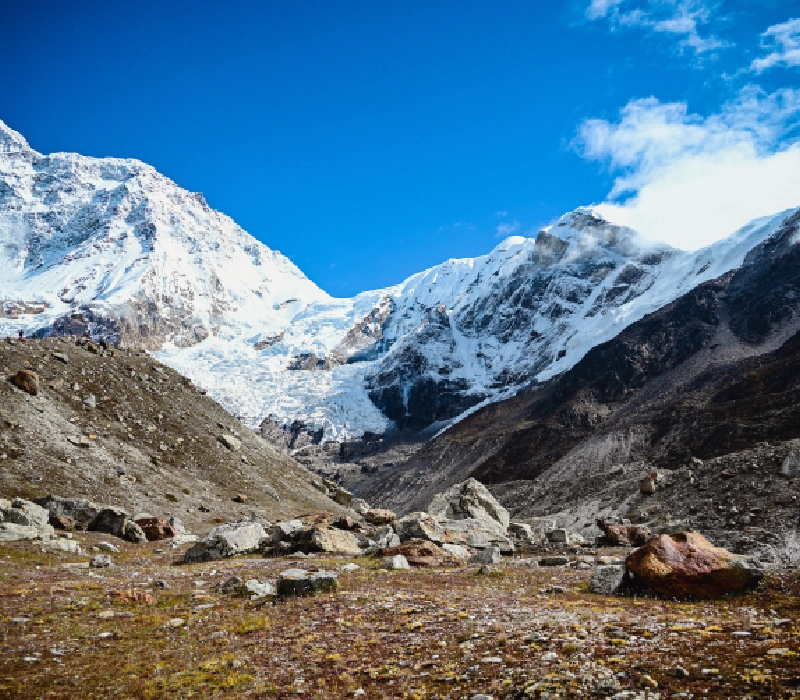
You're on a nice trail as you start your ascent but move slowly because the climbing feels difficult at this height. While winding your way around the valley, keep the river on your left. Each bend will present you with a different striking feature to take in. Your most of the journey today will be on a good, sandy trail. Although the track softly undulates and there are just a few steeper sections on the way. After a few hours of walking, you arrive at Shershong, a big, flat region with a locked tiny stone house at 4,630 meters. It is a decent camping location. Mighty Makalu eventually glimpses tantalizingly into view. You look up in awe at its imposing face with its icefalls, crevasses, jagged edges, and seracs. You start to wonder when the base camp will become visible as you navigate a few bends. Eventually, the lodges and a cluster of tents that serve as the base camp will come into view. Your long-awaited goal is reached in five minutes after you descend and cross the river. Makalu, the fifth-highest peak in the world, absolutely dominates the scene, as one might anticipate.

Day 13 Trek around Makalu Base camp and Dudh Pokhari

  • Walking Distance2-3 km
  • Highest Altitude 4950m/16,240ft
  • AccommodationTea House/Camping
  • Included mealsBreakfast,Lunch & Dinner
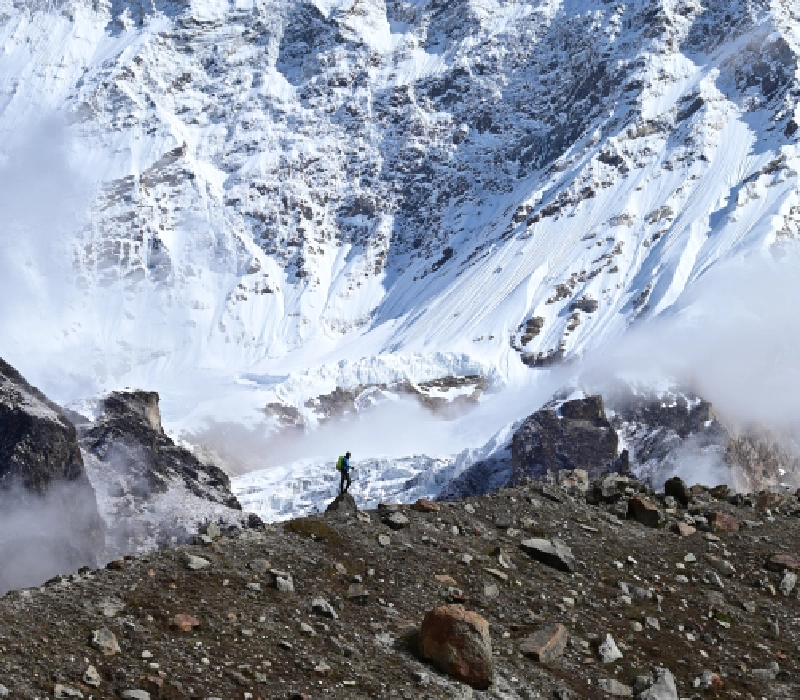
You can see the mighty Makalu soaring high above the cloud. Climbing to the ridge, located about 5,300 meters above the base camp, is one alternative available today that guarantees the most breathtaking panoramic vistas. You use the log bridge to cross the river, then spend roughly three hours ascending on a hazy, uncertain road. You can see the colourful tents from different expedition groups preparing for the Makalu expedition. You can see the stunning view of Nuptse, Lhotse and Everest from this viewpoint. After a few hours of hiking, return the same way you came to base camp. It should take about 4-5 hours to travel round trip. It's a demanding task because it's steep and the altitude will hit you hard at that place. Additionally, just above base camp, you can do a much shorter ridge climb to see the clear image of Makalu and its reflection on the Dudh Pokhari lake. You can ask your guide for alternate options as well.

Day 14 Trek from Makalu Base Camp to Yangle Kharka

  • Walking Distance18 km
  • Highest Altitude3560m/11680ft
  • AccommodationTea House/Camping
  • Included mealsBreakfast,Lunch & Dinner
You reluctantly depart leaving behind the amazing beauty of Makalu and start walking back to Yangle Kharka. After one and a half hours, you can reach Shershong. You return to Yangmale after another hour or so, where you could have lunch or tea. You reach Merek's tea store next after about one hour of downhill walking. Before navigating your way back through pine forests to Yangle Kharka, it is a good idea to relax with a cup of tea. From the tea store in Merek, it takes about two and a half hours to get here.

Day 15 Trek from Yangle Kharka to Shivadhara – Yangle Kharka

  • Walking Distance12 km
  • Highest Altitude4310m/14,140ft
  • AccommodationTea House/Camping
  • Included mealsBreakfast,Lunch & Dinner
Start your walk early in the morning, and make sure you have adequate food and water. With the assistance of your guide, carefully ascend past Nghe Kharka (3710m) to Shiva Dhara (4310m). Take a soak in the holy spring that cascades from a tall cliff. Visit Ama Bhujung, Parbati Gupha, and other locations. Take in the sights before returning to Yangle Kharka (3557 m) (6-8 hours trekking) Stay the night at the same Yangle Kharka teahouse.

Day 16 Trek from Yangle Kharka to Dobate

  • Walking Distance12.6 km
  • Highest Altitude3650m/11,975ft
  • AccommodationTea House/Camping
  • Included mealsBreakfast,Lunch & Dinner
The path down to the tea shop at Phemathang is a really nice, slow meander that follows the river, and as you get closer, you pass a lot of rhododendron bushes. Just before Phemathang, there is a wooden bridge that must be crossed. To get here will take about one and a half hours. You will eventually need to cross a landslide area, which takes about 1.5 hours. There are some narrow passageways here, so go with caution. You begin climbing rapidly into the rhododendron forest after a short stretch of undulation. As you near the lodge at Dobate, the ascent gradually eases and the walking gets easier. Make sure you pack snacks and water since there are no more rest places until you reach Dobate.

Day 17 Trek from Dobate to Tashigaon

  • Walking Distance15 km
  • Highest Altitude2100m/6,890ft
  • AccommodationTea House/Camping
  • Included mealsBreakfast,Lunch & Dinner
Today is the last opportunity to witness the magnificent vistas of the tall mountains, especially Kangchenjunga. At 4170m, you will start your ascent to the Keke La, which should take you around 1.5 hours. Your highest peak today, the Shipton La at 4200m, is another 1.5 hours away. You will reach the huge cairn that marks Sano Pokhari Danda at 4,105m after another hour and two of winding around the mountainside. You return to the final pass, the Khongma La at 3,890m, which is identified by a mani wall, after another hour of undulations. You descend for around 250 meters, mostly down stone steps, before arriving at Khongma. It takes about two hours to descend from Khongma to Danda Kharka. The final 2.5 hours are spent on the descent to Tashigaon.

Day 18 Trek from Tashigaon to Num

  • Walking Distance9 km
  • Highest Altitude1980m/6480ft
  • AccommodationHotel
  • Included mealsBreakfast,Lunch & Dinner
The majority of the stone stairs that descends to Arun River are long and fairly steep. As you descend deeper into the jungle, it will feel incredibly warm. After crossing the river, you must climb 200 meters to get back to Changla Kharka. You can hire a jeep/sumo to Num from this point. You can now give yourself a pat on the back for successfully completing one of the most difficult but worthwhile treks.

Day 19 Drive from Num to Tumlingtar

  • Walking DistanceN/A
  • Highest Altitude500m/1700ft
  • AccommodationHotel
  • Included mealsBreakfast,Lunch & Dinner
After early breakfast, you will drive to Tumlingtar to get your return flight to Kathmandu. Our representative will meet you and drive you to your accommodation. You have the remainder of the day to unwind and recover from your efforts. Pack your belongings and get everything ready because we are leaving for Kathmandu tomorrow. Overnight in Tumlingtar.

Day 20 Fly from Tumlingtar to Kathmandu

  • Walking DistanceN/A
  • Highest Altitude1400m/4593ft
  • AccommodationHotel
  • Included mealsBreakfast,Lunch & Dinner
After your trip to Makalu Base Camp in the mountains, you will fly back to Kathmandu if the weather is clear and visible. At your hotel, you may unwind and take a break throughout the day, or we can communicate with the people we worship. With a farewell supper in the evening, you can celebrate your successful and off-the-beaten-path hiking in Nepal to the Makalu base camp and back. After landing in Kathmandu, you can do some shopping and enjoy your time exploring other areas nearby. We will provide a successful celebration dinner at a restaurant nearby.

What's Included

  • All the transportation during the trek.
  • Flight from Kathmandu – Tumlingtar round trip.
  • Accommodation during the trek.
  • Breakfast, Lunch, and Dinner
  • 3-star hotels with B and B.
  • Professional and Licensed English speaking Guide.
  • UNESCO site entrance fees in Kathmandu.
  • Porters to carry your luggage during the trek (1 porter for 2 Persons), their wages, medicine, insurance and necessary equipment.
  • All necessary Permits & TIMS cards (Trekker’s information management system).
  • Makalu Rural Municipality Permit.
  • Travel & Rescue arrangements.
  • Farewell dinner in Authentic Nepali Restaurant and gifts.
  • All our government taxes, vat, official expenses & service charges

What's Not Included

  • All personal expenses.
  • Personal clothing, gears, sleeping bag and other necessary items.
  • Tipping guides and porters.
  • Cost raised by flight cancelation, emergency rescue charges, landslide, weather, political unrest, illness, re-routing etc which are not under our control
  • Personal food consumption.
  • International Flight, Airport tax and Nepal Visa fee

FAQs For Makalu Base Camp Trek Expand All Collapse All

General Information

Typically, 14-16 days, depending on route and acclimatization.

March–May and September–November for clear skies and pleasant weather.

4870 meters at Makalu Base Camp.

Daytime: 15–25°C, Night: can drop to -5°C near base camp.

TIMS card and Manaslu Conservation Area Permit (MCAP).

Wi-Fi is available for a fee; mobile networks are available in lower regions.

Teahouses offer basic amenities, including shared rooms and bathrooms.

Who Can Trek

Not mandatory, but good physical fitness is necessary.

Yes, especially with a local guide or joining a group trek.

Yes, with medical clearance and a slower itinerary.

No, it is physically demanding route.

Not recommended.

Only with the doctor’s approval and necessary precautions.

It is mandatory to have a guide and a group size must be two or more.

Trek Preparation & Packing

Travel insurance that covers trekking above 4,000m and emergency evacuation.

Layers, down jacket, waterproof outerwear, trekking boots, headlamp, gloves, and sleeping bag. More information below.

Yes, quality gear is available in Kathmandu.

Cardio training, leg strength workouts, and hiking practice for 4–6 weeks.

Keep it under 8–10kg; porters carry up to 20–25kg.

Waterproof trekking boots with ankle support.

Yes, carry water purifier tablets and energy snacks, such as protein bars.

Food, Health & Safety

Local Dal Bhat, noodles, pasta, pancakes, soups, and tea/coffee.

Yes, the food in teahouses is hygienic and prepared fresh.

Boiled water is available; carry purification tablets or a good bottle.

Rest, hydrate, and descend if symptoms worsen. Always inform your guide.

Yes, but limited clinics are in Khadbari.

Not recommended; risk of landslides (monsoon) and snow blockage (winter).

Avoid cold foods, stay hydrated, and carry a basic medical kit.

Cost & Booking Info

Ranges from $600–$1200 depending on package, duration, and services.

Accommodation, meals, permits, guide/porter services, and transportation.

Wi-Fi, hot showers, charging, bottled water, and snacks are extra.

Yes, but pre-booking is better during peak seasons.

Yes, 10–30% advance to confirm the booking.

Yes, for 3 or more trekkers, we offer discounted rates.

Yes— around 10% of the total trek cost for guides/porters.

Fix Date

View Packing Checklist

Insurance

If you’re planning a trekking adventure in Nepal—especially at high altitudes, it’s smart to arm yourself with the right insurance. Here’s what you need to know:

Why You Definitely Need Trekking Insurance in Nepal

  • Not always legally required, but almost every trekking agency in Nepal will require you to carry valid travel insurance with emergency medical evacuation and repatriation coverage.
  • In the remote Himalayas, helicopter rescues are common due to altitude sickness or injury—and without insurance, these cost thousands of dollars.

Must-Have Coverage Features

  1. High-altitude trekking coverage
    • Your insurance must match or exceed your planned maximum altitude.
    • Providers vary widely—some cap at 4,000 m, others go up to 6,000 m or more.
  2. Helicopter evacuation & emergency medical care
    • Ensure the policy includes both—ideally with pre-authorization or direct billing options.
  3. Adventure activity & trip protection
    • Coverage should include trekking, trip cancellation/interruption, lost baggage, and possibly COVID-related disruptions.
  4. Sufficient medical coverage
    • Aim for coverage limits of at least USD 100,000 for emergency medical expenses.

Top Insurance Providers for Nepal Trekking

Based on altitude coverage, assistance services, and user recommendations, here are some top choices:


Provider


   Altitude Coverage

              Notable Features

World Nomads Up to ~6,000 m (Explorer plan up to ~7,000 m). Popular for trekkers; includes helicopter evacuation and trip protection.
Global Rescue 

 IMG)

No altitude cap (with add‑on). Excellent for rescue; needs a travel insurance add-on for broader coverage.
IMG Global Up to ~5,500 m. Good for proper mountaineering packages.
Safety Wing Base up to ~4,500 m (with add‑on for up to 6,000 m). Great for long-term travellers and nomads.
Allianz Travel Standard ~4,000 m (premium plans higher). Strong medical coverage and trip cancellation options.
True Traveller Up to ~6,000 m. Tailored for UK/European adventure travellers.
Local Nepal-focused Plans Up to ~ 5,500 m. Designed specifically for Nepal treks. May offer local support and cashless claims.


Permit Requirements

  1. Makalu Conservation Area Permit.

Essential Gear Checklist — Categorized

Clothing: Layer Up Smartly

  • Base Layers: Moisture-wicking long-sleeves and bottoms (synthetic or merino), about 2–3 sets
  • Mid Layers: Fleece or microfleece jackets for insulation
  • Insulated Jacket: Puffy down/synthetic warm layer (~700 fill power suggested)
  • Shell Layer: Waterproof, breathable jacket (e.g., Gore-Tex) and waterproof pants
  • Trekking shirts, pants, and shorts—lightweight and quick-dry
  • Headgear: Sun hat or cap, warm beanie, and buff/neck gaiter
  • Gloves: Lightweight liners plus insulated, waterproof outer gloves

Footwear

  • Waterproof, broken-in hiking bootswith strong ankle support
  • Camp shoes or sandalsfor evenings in teahouses
  • Hiking socks(4–7 pairs) and liner socks are optional for extra comfort
  • Gaitersare handy for muddy or snowy conditions

Bags & Storage

  • Main backpack:
    • Teahouse treks: 35–50 L (if using a porter, you can go smaller)
    • Camping treks: 50–70
  • Daypack(20–30 L) for daily essentials
  • Rain cover, dry sacks, and compression cubes for water-tight organization

Trekking Essentials

  • Trekking poles—helpful on rough terrain
  • Headlamp / Flashlight + extra batteries
  • Sunglasses with UV protection
  • Water bottles (min. 3 L) and purification method(tablets, filter, or UV)
  • Navigation Tools: physical map, compass, GPS (good to carry all)
  • Emergency items: first aid kit, emergency bivy or space blanket, fire starter, satellite phone or beacon if remote

Health & Hygiene

  • First aid supplies: painkillers, blister treatment, antiseptic, antihistamine, anti-diarrheal, altitude meds (e.g. Diamox), personal prescriptions
  • Toiletries: toothbrush, toothpaste, soap, quick-dry towel, wet wipes, toilet paper, hand sanitizer, lip balm & sunscreen SPF 50+
  • Pee bottle—very handy for cold nights!

Personal & Miscellaneous

  • Documents: passport (plus copies), Nepal visa, trekking permits (TIMS, parks)
  • Cash (Nepali rupees), as many remote areas lack card readers
  • Electronics: phone with offline maps, power bank (20,000 mAh), charging cables, adapter (Type C/D/M); optional solar panel
  • Camera, extra batteries, memory cards
  • Personal touches: journal, book or Kindle, snacks, pen, earplugs, small lock


Physical fitness:

Trekking to Makalu Base Camp is a physically demanding activity, and it requires a good level of physical fitness. One should engage in regular cardiovascular and strength-building exercises for at least a few months before embarking on the trek. Exercises such as hiking, running, cycling, and strength training will help prepare the body for the rigours of trekking.

Adequate acclimatization:

Core Principles of Altitude Acclimatization

1. Ascend gradually: slow and steady wins

  • Once you’re above ~3,000 m, aim to ascend no more than300–500 m (1,000–1,600 ft).
  • After ascending ~1,000 m total, insert a rest or acclimatization day, staying at the same altitude.
  • The proven approach? Climb high, sleep low—go higher during the day, but come back down to sleep.

2. Take scheduled acclimatization days

On key treks with high elevation in Nepal

  • Rest at 3000 metres—usually for 1 to 2 nights. Rest again at 4000 metres —typically 1nightto cope with altitude above ~4,900 .
  • Overall, standard expeditions build in two full acclimatization days.
  • Hydrate and fuel your body
  • Drink 3–4 litres of fluids per day—water is vital, as dry, high-altitude air increases fluid loss.
  • Favour light, carbohydrate-rich meals (rice, pasta, soups, dal bhat) to maintain energy. Avoid things that hamper acclimatization
  • Alcohol, smoking, and sleeping pills are strongly discouraged—they dehydrate, reduce oxygen intake, and impair breathing.
  • Consider medication—but consult a doctor
  • Acetazolamide (Diamox) can help prevent AMS. Typical dosage: 125–250 mg twice daily, starting a day or two before climbing.
  • Always consult with a healthcare provider before use. Side effects may include tingling sensations and frequent urination.

3. Recognize early symptoms and respond appropriately

  • Mild AMS signs: headache, nausea, dizziness, fatigue, insomnia
  • If symptoms appear: stop ascending, rest, hydrate, and descend if they worsen. Severe AMS—especially HAPE or HACE—requires immediate descent.
  • Trekking with experienced guides improves safety—they monitor symptoms and can arrange oxygen or helicopter evacuation if needed
  • Always have travel insurance that covers high-altitude emergencies and rescue.

Why This Matters

  • Proper pacing and acclimatization reduce the risk of AMS, HAPE, HACE, and evacuation needs.
  • Hydration, diet, and active rest support both physical and mental well-being at altitude.
  • Guided treks with safety protocols make your journey not just possible—but also memorable.

What People Share from Experience

These firsthand accounts reinforce why acclimatization planning and hydration are non-negotiable.

Acclimatization is the process of adapting to high altitudes. As you trek higher, the air becomes thinner, and the body needs time to adjust. Adequate acclimatization is essential to prevent altitude sickness, a potentially fatal condition. It is recommended to spend a few days at lower altitudes to allow the body to acclimatize before climbing higher.

A knowledgeable guide:

Trekking to Makalu Base Camp is a challenging activity, and having a knowledgeable guide is essential for success. A guide will help navigate the route, provide information about the local culture, and assist in case of any emergencies. It is important to choose a guide who is experienced and knowledgeable about the trek.

Proper nutrition and hydration:

Proper nutrition and hydration are crucial for maintaining energy levels and preventing altitude sickness. It is recommended to consume a high-carbohydrate and protein-rich diet to provide the necessary fuel for the body. It is also important to drink plenty of fluids to stay hydrated. It is recommended to carry a water purification system or tablets to ensure access to clean water.

Mental preparation:

Trekking to Makalu Conservation is a mentally challenging activity. It requires patience, perseverance, and mental toughness. It is important to be mentally prepared for challenges and to have a positive attitude. It is also important to be aware of the risks and to take appropriate precautions.

Respect for the environment and local culture:

Trekking to a remote area of the Makalu Conservation Area is an opportunity to experience the unique local culture and environment. It is important to show respect for local culture and customs and to minimize environmental impact.

Basic first aid knowledge:

Basic first aid knowledge is essential for trekking to Makalu Base Camp. It is important to know how to treat common injuries and illnesses, such as blisters, altitude sickness, and hypothermia. It is recommended to carry a basic first aid kit with essential items such as bandages, antiseptics, and pain relievers.

Contact us